

Gallardo Superleggera Automatic Driving Tips (No More Rookie Mistakes!)
Mastering the Beast: Superleggera Automatic Driving Fundamentals

So you've got your hands on a Lamborghini Gallardo Superleggera with the E-Gear transmission – congratulations! How to properly drive a Lamborghini Gallardo Superleggera automatic isn't as straightforward as your everyday car, but that's part of what makes this Italian masterpiece so special.
| Aspect | Recommendation |
|---|---|
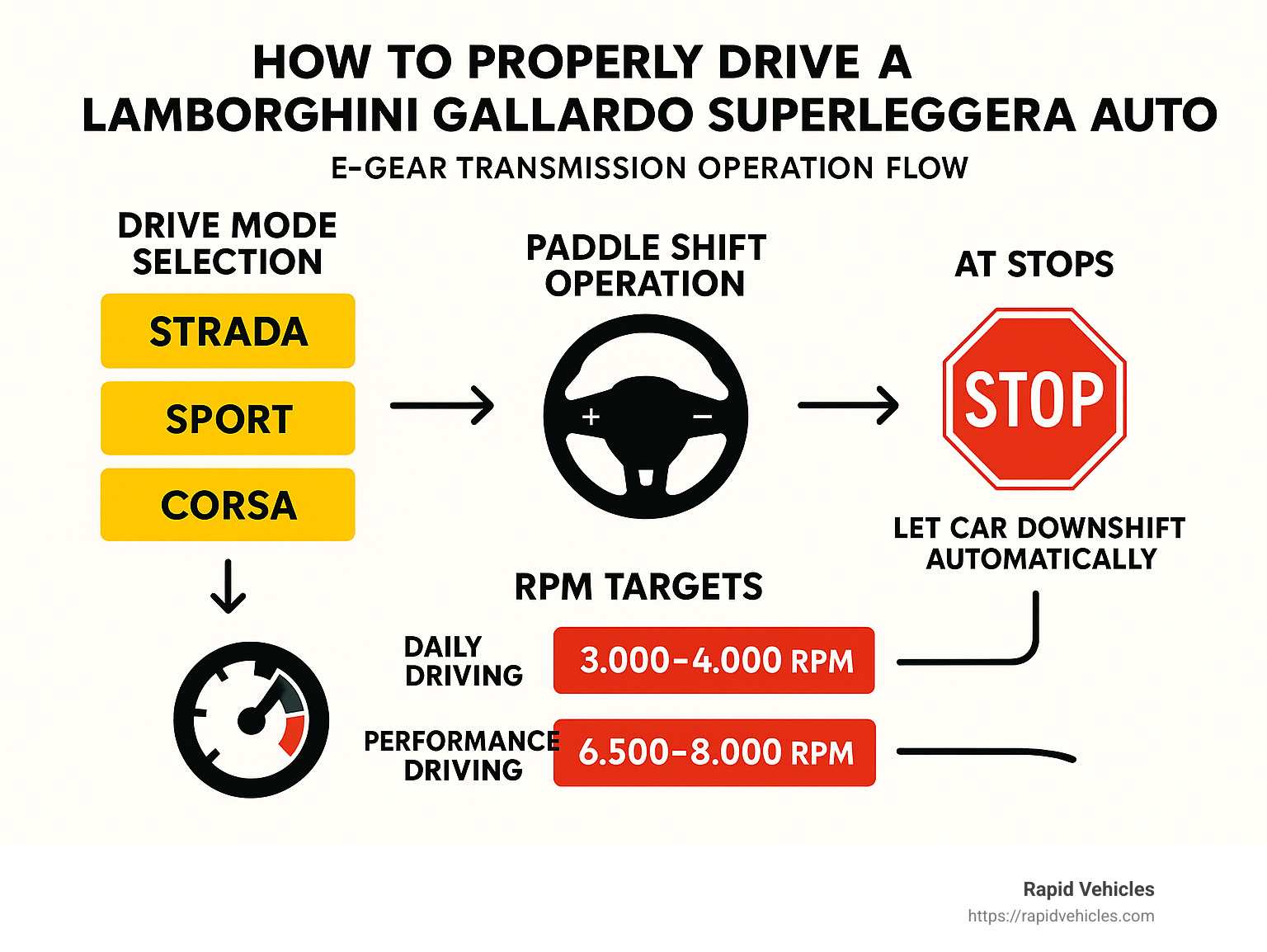
| Drive Modes | Use Strada (Auto) for traffic, Sport for spirited driving, Corsa only for track |
| Shifting | Manual paddle mode preserves clutch better than full auto mode |
| RPM Range | Daily driving: 3,000-4,000 RPM, Spirited driving: 6,500-8,000 RPM |
| At Stops | Let car downshift automatically rather than manually shifting down each gear |
| Launch | Roll into throttle gradually; avoid hard launches for clutch longevity |
When you slide behind the wheel of this Italian thoroughbred, you're taking control of a finely-tuned racing machine disguised as a road car. The Superleggera isn't just a pretty face – "super light" isn't just marketing speak. This beauty sheds a remarkable 154 pounds from the standard Gallardo through clever use of carbon fiber and other lightweight materials.
What makes this car truly special is the sophisticated E-Gear transmission. It's not your run-of-the-mill automatic – it's actually a computer-controlled manual that can shift gears in as little as 150 milliseconds in Corsa mode. Think of it as having an invisible racing driver handling your clutch work while you focus on the road ahead.
Here's where many new owners go wrong: treating the E-Gear like a traditional automatic transmission. I've spoken with numerous owners who learned this mistake the hard way. As one Superleggera owner told me with a rueful smile, "Although automatic mode is the most comfortable for me, I heard that it puts the most wear on the clutch." He's absolutely right – the E-Gear system tends to be a bit clutch-happy in full automatic mode, especially when you're crawling through traffic.
Why This Guide Matters
Driving a Lamborghini isn't just about having the keys and looking cool at stoplights (though that's definitely a perk). It's about understanding how to release this magnificent beast's full potential while respecting its engineering brilliance.
The E-Gear transmission in your Superleggera isn't like anything you've driven before. It's a high-strung, race-bred piece of technology that needs to be handled with knowledge and care. As Matt Davis noted after his track test at Monteblanco circuit in Spain, "Nothing helps us notice all of what works so well here more than doing lots of hot laps." While you might not be hitting the track tomorrow, understanding proper operation ensures you'll get maximum thrills with minimum repair bills.
What You'll Learn
Throughout this guide, I'll walk you through everything you need to know about your Gallardo Superleggera's unique personality. We'll cover how to use that E-Gear transmission like a pro in everything from rush hour traffic to mountain passes. You'll learn the sweet spots for daily RPM ranges versus those special weekend drives when you want to hear that glorious V10 sing.
We'll also dive into practical techniques for launching without excessive clutch wear, how to corner with that AWD system, and when to use each driving mode. I'll even share some insider tips for tall drivers who might find the cockpit a bit... intimate.
Safety First – Know Your Limits
Before we get into the fun stuff, let's have a quick heart-to-heart. Your Superleggera packs 523 horsepower in a car weighing just 2,954 pounds. That's a recipe for exhilaration – and potential trouble if not respected.
As a veteran supercar instructor once told me with a wink: "With great horsepower comes great responsibility." It made me laugh, but it's solid advice. Always drive within your abilities and the conditions around you. No driving technique in the world can overcome physics if you push beyond what's possible.
And remember, in today's smartphone world, assume there's always a camera pointed your way. Your bright, loud Lamborghini doesn't exactly blend in with traffic, so mistakes won't go unnoticed. Save the limit testing for track days, where you can explore the car's capabilities safely.
Now that we've covered the basics, let's dive into making this magnificent machine dance to your commands!
Understanding E-Gear & Drive Modes
The heart of properly driving a Lamborghini Gallardo Superleggera automatic lies in understanding its E-Gear transmission system. Unlike a traditional automatic with a torque converter, the E-Gear is an electro-hydraulic automated manual transmission that uses computer-controlled actuators to operate the clutch and shift gears.
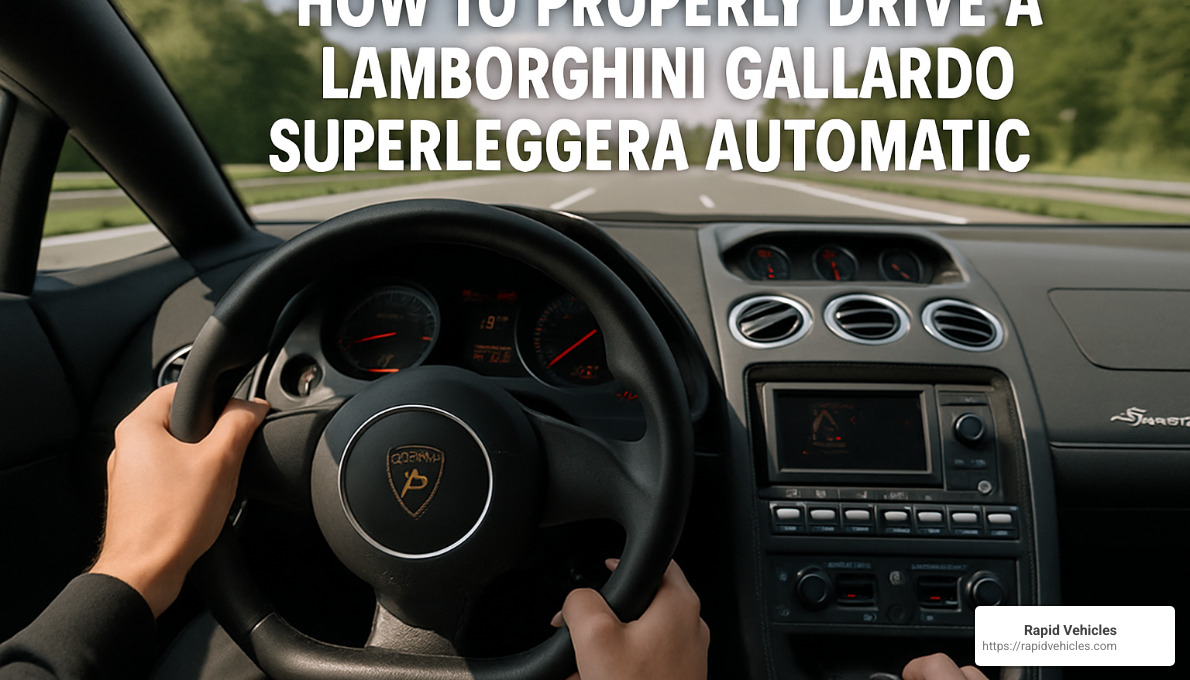
Think of the E-Gear system as having a robot operate a manual transmission for you. This unique setup gives you the best of both worlds—convenience when you want it and control when you need it. The magic happens through several driving modes, each with its own personality.
When cruising through town, Strada (Street) mode handles all the shifting duties automatically. It's comfortable and relaxed—perfect for daily driving and traffic jams. Just be aware that this mode, while convenient, tends to be the hardest on the clutch over time.
Want to spice things up a bit? Switch to Sport mode for quicker shifts and a more responsive throttle. It's your go-to for spirited drives on winding roads. The car will still downshift automatically in this mode, but you can grab those gorgeous paddles anytime you want to take control.
For those special track days, there's Corsa (Race) mode. This is the Superleggera in its most aggressive state—shifts happen in as little as 150 milliseconds! Be prepared for a more intense experience, as these lightning-fast shifts can feel quite abrupt. In Corsa, you'll need to handle all downshifts manually via the paddles, which gives you complete control over the car's behavior.
And for those rare snowy days when your Lambo isn't safely tucked away in the garage, Winter mode tames the beast with gentler power delivery and more controlled starts on slippery surfaces.
The Superleggera's all-wheel-drive system splits torque 30:70 front-to-rear, giving you just enough grip up front while maintaining that exciting rear-wheel-drive feel that makes Lamborghinis so thrilling. The lightweight magnesium casings for the gearbox and front differential are part of what puts the "leggera" (light) in Superleggera.
For more details on Lamborghini's engineering approach, you can visit the official Lamborghini website.
Automatic vs Paddle-Shift: Comfort, Performance & Wear
"Should I use automatic mode or the paddles?" This question comes up in almost every Superleggera owner forum, and for good reason. While automatic mode offers convenience, there are compelling reasons to become friends with those beautiful paddles behind the steering wheel.
Your clutch will thank you for using the paddles. The E-Gear system tends to slip the clutch more in automatic mode, particularly during low-speed crawling and stop-and-go traffic. By shifting manually, you gain more control over when that clutch engages.
"I've put over 80,000 km on my original clutch," shared one Gallardo owner at a recent car meet. His secret? "I use the paddles most of the time and save automatic mode only for heavy traffic when my left arm gets tired."
Performance improves with paddle shifting too. You can keep the engine exactly where you want it in the power band, anticipate corners, and prepare for overtaking maneuvers. As one forum user colorfully put it: "Manual mode is smoother than auto mode because you can see what's coming—the car can't read the road ahead like you can!"
The engagement factor can't be overlooked either. There's something deeply satisfying about clicking through those gears yourself, feeling connected to the car's mechanical heart. It transforms driving from transportation to experience.
How the Car Handles Downshifts in Sport/Corsa
The Superleggera approaches downshifting differently depending on which mode you've selected. In Sport mode, the car helpfully downshifts automatically as you slow down. While convenient, these automatic downshifts happen earlier than you might choose yourself, as the system prioritizes keeping the engine ready in its power band.
Switch to Corsa mode, and you're fully in charge—no automatic downshifts here. You must use the left paddle for every downshift, which demands more attention but rewards you with complete control.
For the smoothest downshifting experience, let the car slow naturally before dropping a gear. Try to avoid downshifting mid-corner when possible, as this can unsettle the car's balance. The engine's symphony provides the perfect guidance—listen to it like a musical instrument, and you'll intuitively know when to shift.
In Sport mode, be ready for those automatic downshifts to occur earlier than expected. They might surprise you at first, but you'll soon learn to anticipate them.
"How to properly drive a Lamborghini Gallardo Superleggera automatic" – Mode Selection Essentials
How to properly drive a Lamborghini Gallardo Superleggera automatic requires matching the right mode to the right situation—think of it as dressing appropriately for different occasions.
For daily commuting and traffic jams, Strada mode is acceptable, but your clutch will appreciate if you still use the paddles when possible. It's like choosing comfortable shoes that still look good.
When the road opens up and gets twisty, Sport mode with manual paddle shifting offers the best balance of performance and control. This is where the Superleggera really shines—responsive but not punishing.
Track days call for Corsa mode with manual paddle shifting. As one track instructor colorfully advised during a recent driving experience: "Use Sport mode for street cruising and save Corsa mode for the track—unless you want your passenger's head bobbing like a dashboard ornament." The lightning-quick shifts in Corsa mode deliver incredible lap times but can be jarring for everyday use.
When Mother Nature throws wet or slippery conditions your way, Winter mode helps manage power delivery to keep that beautiful Italian bodywork away from the barriers.
The E-Gear transmission is sophisticated but still mechanical at heart. Treating it with respect by choosing the right mode for each situation will ensure many years of thrilling drives in your lightweight bull.
Mastering Shifts & RPM Targets
Knowing when to shift is crucial for both performance and mechanical sympathy when driving a Gallardo Superleggera. The E-Gear transmission can shift at virtually any RPM within the engine's operating range, but there are optimal points depending on your driving style.
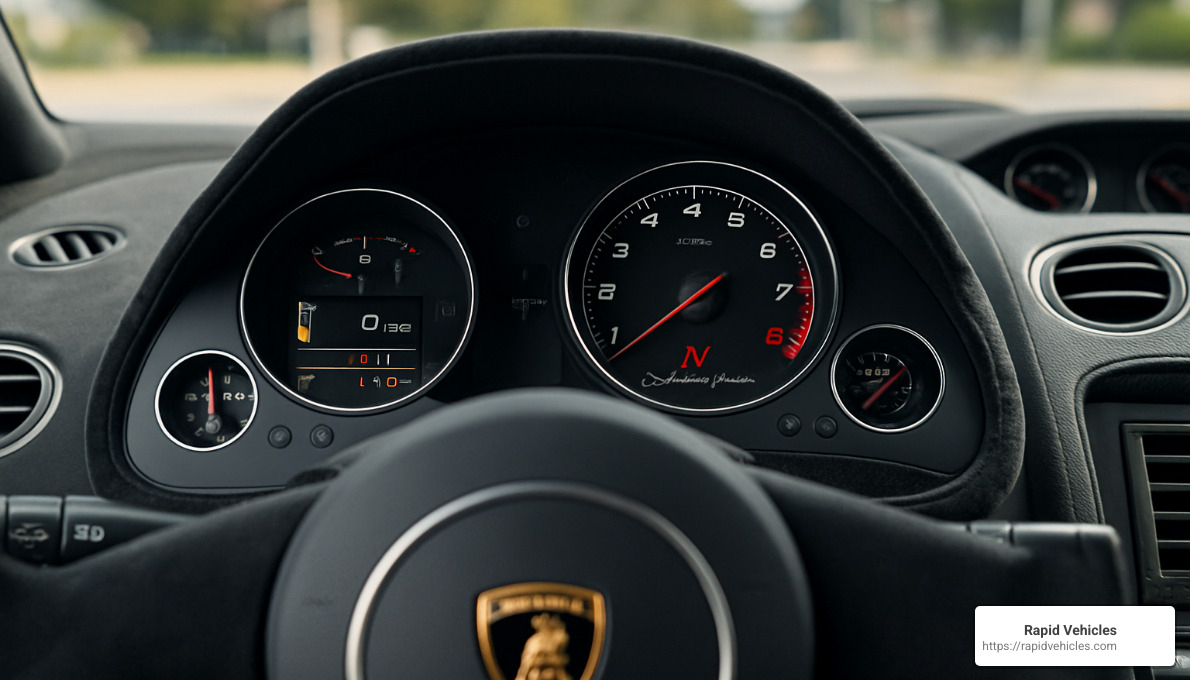
Daily-Driving RPM & Smoothness
For everyday driving in your Superleggera, think smooth and gentle. Your goal should be efficiency that minimizes wear on that precious drivetrain.
Most experienced owners find that upshifting between 3,000-4,000 RPM provides the perfect balance of performance and mechanical sympathy during normal acceleration. When you need a bit more grunt, downshift around 2,000-2,500 RPM to access the V10's power reserve.
Here's a little trick shared by a Lamborghini forum user named "galt" that's made a world of difference for many owners: "You will find if you slightly lift off the gas as you shift you will be able to shift very smoothly." This small throttle adjustment helps the E-Gear system engage the next gear with minimal jerkiness – your passengers will thank you!
When coming to a stop in traffic, many owners recommend simply letting the car automatically downshift rather than manually clicking through each gear. This approach is not only more convenient but can actually be gentler on the clutch assembly.
As one owner with over 100,000 miles on his Gallardo told us: "Don't rush the shifts. The car has plenty of power even when shifting conservatively, and your clutch will thank you with years of trouble-free service."
Spirited Runs & Track Sessions
When it's time to release the Superleggera's true potential, your shifting strategy should change dramatically.
For maximum performance, you'll want to upshift between 6,500-8,000 RPM to stay firmly in the power band. Peak power in the Superleggera occurs at 8,000 RPM – that glorious point where the V10 is singing its heart out and pushing you back in your seat with every shift.
Downshifts during spirited driving should happen at higher RPMs (4,000-5,000) to maintain engine braking and immediate throttle response. And of course, Corsa mode becomes your best friend for the fastest possible shifts.
Matt Davis, after his track experience at Monteblanco, noted: "Nothing helps us notice all of what works so well here more than doing lots of hot laps." On the track, you'll find that maintaining throttle pressure during upshifts in Corsa mode results in faster, more aggressive shifts that keep power delivery consistent through the gears.
| Driving Scenario | Upshift RPM | Downshift RPM | Recommended Mode |
|---|---|---|---|
| City Traffic | 2,500-3,000 | Let auto downshift | Strada/Sport |
| Highway Cruising | 3,000-4,000 | 2,000-2,500 | Sport with paddles |
| Spirited Road Driving | 5,000-6,500 | 3,000-4,000 | Sport with paddles |
| Track Driving | 7,500-8,000 | 4,000-5,000 | Corsa with paddles |
"How to properly drive a Lamborghini Gallardo Superleggera automatic" – Upshifting & Downshifting
How to properly drive a Lamborghini Gallardo Superleggera automatic transmission means developing a good relationship with those paddle shifters. They're intuitive once you get used to them:
The right paddle (usually marked with a "+" sign) is pulled to upshift to a higher gear. Think of it as your acceleration buddy – each pull delivers more speed while dropping the RPMs.
The left paddle (usually marked with a "-" sign) is pulled to downshift to a lower gear. This is your deceleration and corner-entry friend, helping you set up for the perfect exit.
A neat trick many owners don't find until months of ownership: pulling both paddles simultaneously engages neutral. This can be particularly useful at longer traffic stops to reduce clutch wear.
For the smoothest upshifts during normal driving, try slightly lifting off the throttle during the shift. When you're pushing hard, though, maintain throttle pressure for those lightning-quick gear changes. Whenever possible, shift in a straight line rather than mid-corner to maintain chassis balance.
Downshifting requires a bit more finesse. Try to anticipate your need to downshift before entering corners – proper planning makes for smoother driving. Allow the car to slow somewhat before downshifting to avoid over-revving that beautiful engine. And use sequential downshifts (one gear at a time) rather than trying to skip multiple gears, which the E-Gear system isn't designed to handle smoothly.
As one track-day instructor put it: "Down-shifts on paddle shifters occur instantly—avoid over-revving by timing down-shifts carefully. Listen to the engine note and you'll develop an intuitive feel for the right moment."
Launching, Stopping & Cornering Like a Pro
Proper technique for starting from a stop, braking, and cornering can make the difference between a smooth, controlled drive and a jerky, potentially dangerous experience in the Superleggera.
Best Practices for Low-Wear Launches
Let's talk about that clutch. The Gallardo Superleggera's clutch is something of a prima donna – capable of incredible performance but also quick to complain if you treat it roughly. While that lightning-fast launch might impress your friends, your wallet won't be thanking you when the clutch needs replacing prematurely.
For everyday starts, I recommend keeping things gentle. Place your foot firmly on the brake, select first gear with the right paddle, then simply release the brake and ease into the throttle. Let the clutch engage naturally without stomping on the gas – your Lambo doesn't need to prove itself at every stoplight.
When you do want a bit more excitement without the repair bill, try this middle-ground approach: brake held down, first gear selected, apply about 20% throttle while still holding the brake, then release and roll progressively into more throttle. This gives you a quicker start without abusing the drivetrain.
As one driving instructor told me, "Roll into and off the throttle smoothly to avoid tire spin and sudden weight transfers." This isn't just mechanical sympathy – it actually maintains better traction and control.
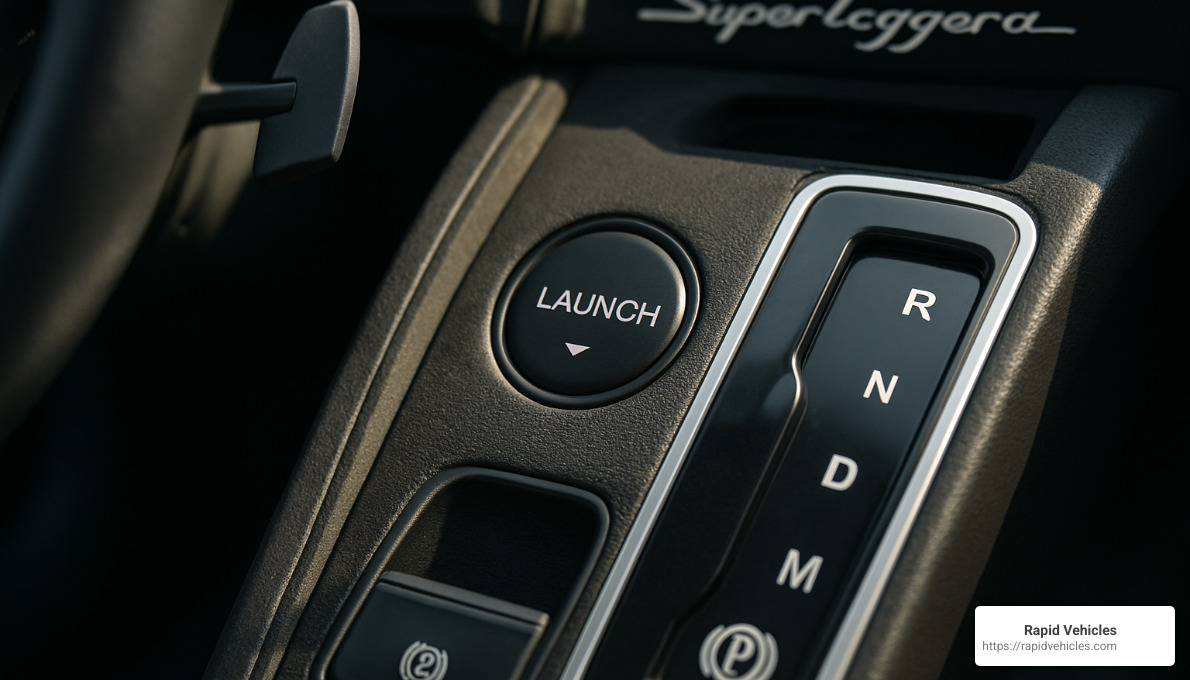
Yes, the Superleggera does have a launch control system, but think of it like that expensive bottle of wine you save for special occasions. One owner put it perfectly: "I save launch control for special occasions—it's not worth the wear and tear for everyday showing off." Your clutch temperature will climb quickly with repeated launches, so give it time to cool between attempts if you're feeling frisky.
Braking Zones, Trail Braking & Corner Exit
Those carbon-ceramic brakes on the Superleggera are engineering marvels, but they do require a thoughtful approach to extract their full potential.
When approaching a corner in your Lambo, begin by applying brakes firmly but progressively while the car is still traveling in a straight line. This initial braking phase should handle most of your speed reduction before turning in. As you start to turn the wheel, gradually ease off the brakes – this is called trail braking, and it helps transfer weight to the front tires, improving turn-in response.
As you reach the apex and begin to unwind the steering wheel, progressively feed in the throttle. Be patient here – the Superleggera's all-wheel-drive system with its 30:70 torque split has a natural tendency toward understeer when pushed hard. Rushing the throttle mid-corner just pushes the front end wider.
Matt Davis noted in his track test: "With ESP fully off, the car easily throws the tail out once understeer subsides, yet remains controllable via the 30–70 AWD torque split." This behavior can actually be quite fun with practice, but it demands respect and skill to manage properly. The weight transfer during cornering is significant, and rushing things will only slow you down.
Downshift or Neutral at Red Lights?
This question sparks more debate among Superleggera owners than you might expect. Should you downshift through each gear when stopping, or use neutral? After talking with numerous experienced owners, the consensus is pretty clear.
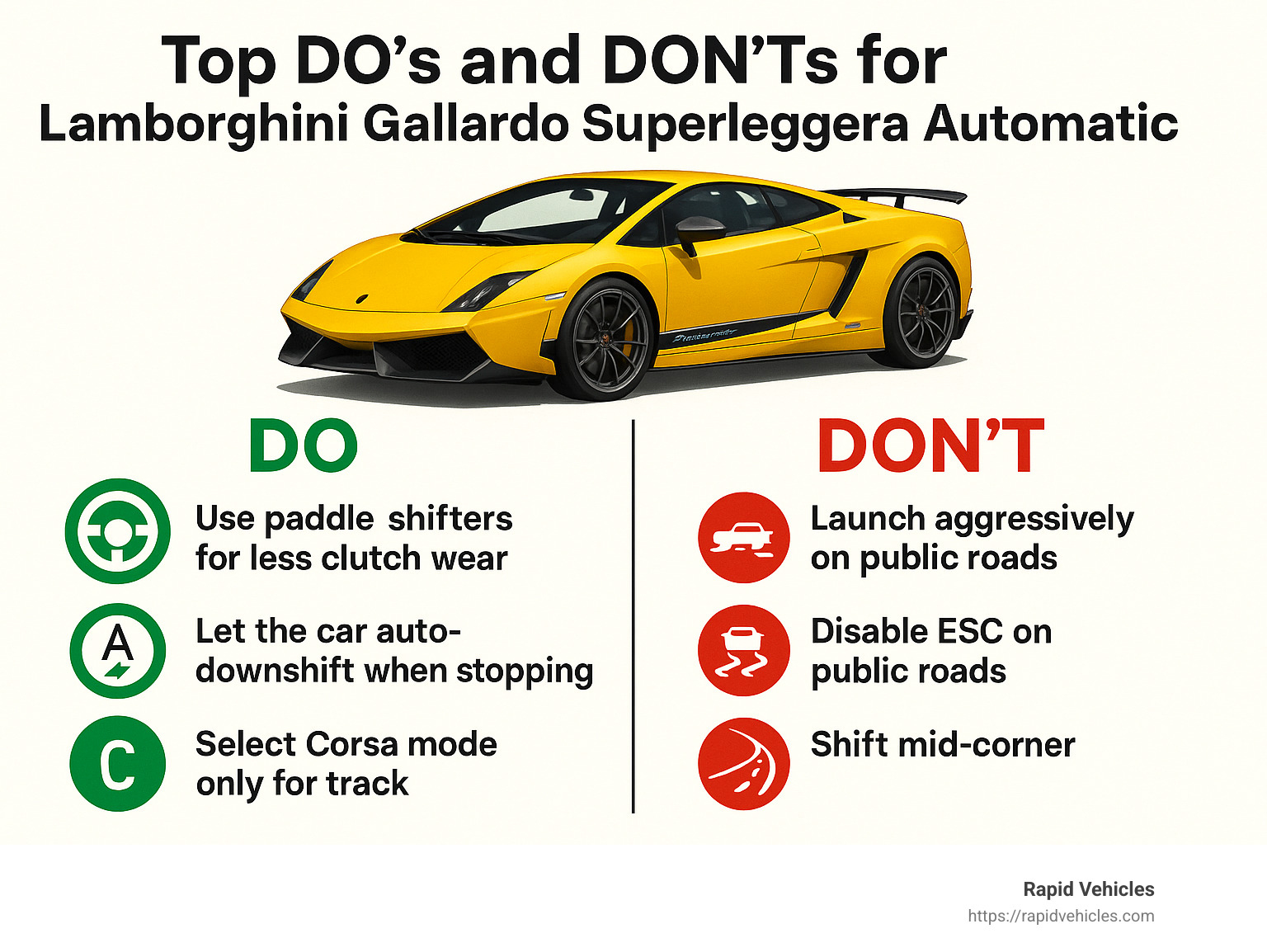
For regular stops, let the car handle the downshifting automatically as you slow down. The E-Gear system was designed to manage this process efficiently, and fighting it often creates more wear than benefit. How to properly drive a Lamborghini Gallardo Superleggera automatic includes knowing when to let the car's computers do their job.
At traffic lights, you have two good options. You can either keep the car in first gear with your foot on the brake (the clutch will automatically disengage), or pull both paddles simultaneously to select neutral. For longer stops, many owners prefer the neutral option as it completely removes any potential for clutch wear while you're sitting there.
When it's time to go again from neutral, simply apply the brake and pull the right paddle to select first gear before proceeding. One forum user explained it nicely: "Putting the car in neutral at a stop light isn't strictly necessary, as the E-Gear system automatically disengages the clutch when the brake is held, but I find pulling both paddles for neutral at long stops gives me peace of mind regarding clutch wear, especially since these clutches cost as much as a decent used Honda to replace."
This balance of performance and mechanical sympathy is what makes driving a Superleggera both an art and a science – and why it's so incredibly rewarding when you get it right.
Driver Aids, Suspension & Road Conditions
The Gallardo Superleggera comes equipped with sophisticated electronic aids and a finely-tuned suspension system that help manage its considerable power. Understanding how these systems work—and when to use them—is essential for safe and enjoyable driving.

When (Not) to Disable ESC
I've seen far too many supercar drivers get themselves into trouble by disabling electronic aids at the wrong time. The Electronic Stability Control (ESC) system in your Superleggera isn't there to ruin your fun—it's there to keep you and your beautiful Italian masterpiece in one piece.
On public roads, always keep ESC fully enabled. This isn't up for debate. The unpredictable nature of traffic, pedestrians, and road conditions means you want every safety net available. As one track instructor colorfully put it after witnessing a close call: "A U.S. journalist crashed a Diablo prototype, prompting tighter electronic stability controls. These systems exist because even professionals mess up."
In wet or slippery conditions, ESC becomes your best friend. The Superleggera's 523 horsepower can overwhelm traction in an instant on wet pavement, and the ESC's ability to manage power delivery and apply individual brakes can save you from an expensive mistake.
While learning the car, keep those electronic nannies on duty. The Superleggera has a unique handling character with its 30:70 torque split, and it takes time to understand how it responds at the limit.
So when might you consider disabling ESC? Only in controlled environments like track days with proper instruction once you're comfortable with the car's limits, during professional driving courses under supervision, or in empty, controlled environments after significant seat time.
The different driving modes adjust how aggressively these systems intervene:
- Strada mode provides full intervention for maximum safety
- Sport allows more slip before stepping in
- Corsa offers minimal intervention for track use
When venturing onto rougher roads, be mindful of the Superleggera's low ground clearance and relatively stiff suspension. Unlike some modern supercars, it doesn't have a lift system to clear speed bumps or steep driveways. Take these obstacles at an angle when possible to avoid expensive underbody damage.
The Lamborghini Gallardo Automatic Spoiler also plays a crucial role in high-speed stability, so make sure it's functioning properly before any spirited driving sessions.
Tall-Driver Ergonomics & Seat Tricks
Let's be honest—the Superleggera wasn't designed with basketball players in mind. If you're blessed with height, you might find yourself doing some creative contortions to fit comfortably behind the wheel.
For drivers over 6'2", the cockpit can feel like a tailor-fitted Italian suit that's one size too small. While the Gallardo is more accommodating than earlier Lamborghini models (I'm looking at you, Countach), you'll still need some strategies to get comfortable.
First, move the seat as far back and as low as possible. This creates maximum legroom and headroom. Next, if your Superleggera has a height-adjustable steering wheel, set it to the highest position to create more thigh clearance.
The recline angle of your seat makes a surprising difference. As one 6'5" owner told me: "Adjusting the seat fully forward and reclining at an obtuse 'beach-lying' angle can create extra room for very tall drivers." It's not the most dignified entry and exit, but once you're in, you're in.
For track days when you need to wear a helmet, headroom becomes even more precious. One resourceful tall owner shared: "I found that aftermarket seat brackets gave me an extra inch of headroom, which made all the difference for track days with a helmet."
Beyond fitting in the car, you need to ensure proper visibility and control. Adjust your mirrors carefully to minimize the Superleggera's considerable blind spots. Position yourself so you can see all critical gauges and ensure you can fully depress the pedals without your knees hitting the steering wheel.
If you're planning long drives, consider taking short breaks to stretch. Even with the perfect seating position, the Superleggera's cockpit can become cramped after a few hours on the road.
How to properly drive a Lamborghini Gallardo Superleggera automatic isn't just about mastering the paddle shifters and finding the right RPM—it's also about being comfortable enough to focus on the driving experience without distraction. After all, discomfort leads to fatigue, and fatigue leads to mistakes—something you definitely want to avoid in a car this powerful.
Track Day vs Public Road Checklist
Driving the Gallardo Superleggera on a track versus public roads requires different approaches, preparations, and techniques. Here's how to adapt your driving style to each environment.
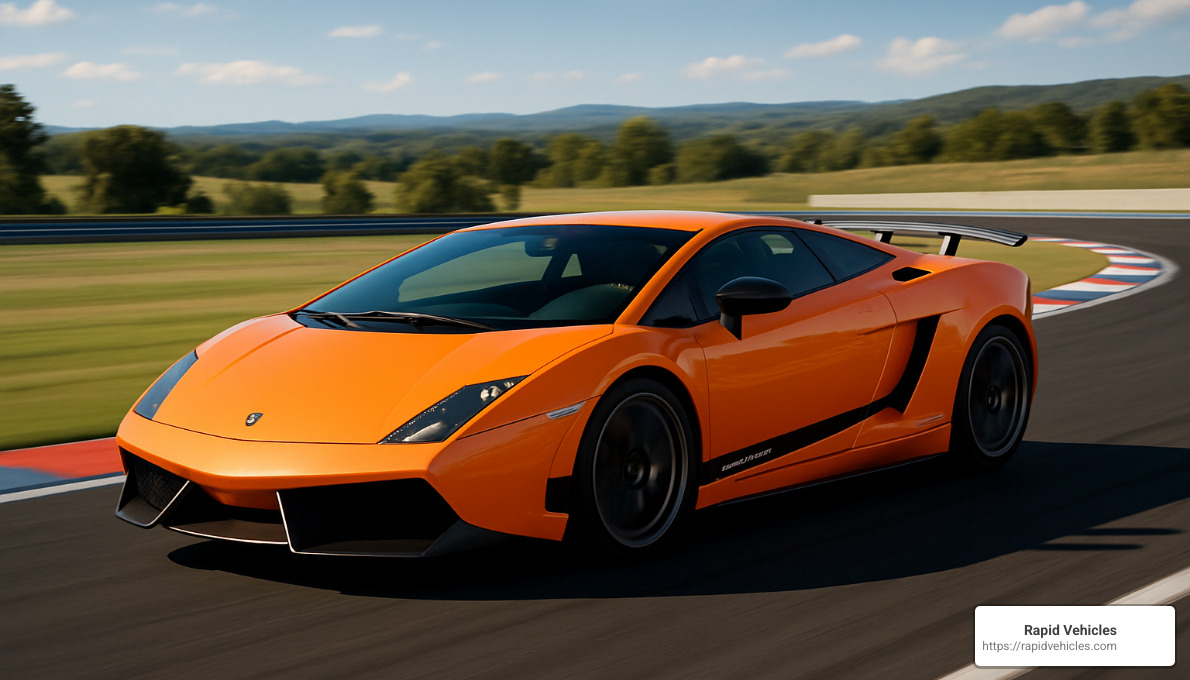
Pre-Track Inspection Steps
Before releasing your Superleggera on the track, you'll want to give it a thorough once-over. Fluid levels are your first priority – check that engine oil, transmission fluid, brake fluid, and coolant are all where they should be. Nothing ruins a track day faster than running low on something essential!
Tire condition and pressure is next on your list. Track driving demands different pressures than street driving, usually a bit higher to handle the increased heat. Take a moment to inspect the tread for any abnormal wear patterns or damage while you're at it.
Those gorgeous carbon-ceramic brakes need attention too. Make sure your brake pads have plenty of material left – track days are notoriously hard on braking systems, and the last thing you want is to run out of stopping power when approaching a tight corner at speed.
Don't forget to verify your wheel torque is spot-on to manufacturer specs. Loose wheels make for exciting stories, but not the kind you want to tell! And always start with a full tank of fuel – track driving is thirsty work, and you don't want to run dry mid-session.
Many drivers find that simulator training before hitting an unfamiliar track can make a world of difference. As one instructor told me, "A 3D simulator session on a laser-scanned replica of the actual track can take seconds off your first real laps." It helps you internalize braking points and corner sequences before you ever turn a wheel in anger.
If it's your first time tracking the Superleggera, consider starting in Sport mode rather than jumping straight to Corsa. Working with an instructor who understands high-performance cars can also dramatically accelerate your learning curve. Remember – build speed gradually as you learn how the car responds. The Superleggera will forgive many mistakes, but it won't forgive all of them.
Post-Session Cool-Down & Data Review
After pushing your Lamborghini hard on track, proper cool-down is essential for preserving its components and extending their life. Always take at least one cool-down lap at reduced pace. This allows brakes, transmission, and engine temperatures to fall gradually rather than shocking the system by coming straight into the pits.
Once parked, let the car idle for 3-5 minutes before shutdown. This simple step ensures continued oil circulation and helps prevent heat soak. While the car cools, perform a quick post-drive inspection – check for any fluid leaks, unusual tire wear patterns, or hot spots on your brakes.
Many modern track facilities offer data and video recording services that can transform how you improve. Reviewing your racing line through corners, analyzing braking points, and studying your throttle application can reveal opportunities you'd never notice from the driver's seat. As a veteran track enthusiast once told me with a laugh, "The data doesn't lie—it shows exactly where you're leaving time on the table, whether your ego likes it or not."
When returning to public roads, you'll need to flip a mental switch. How to properly drive a Lamborghini Gallardo Superleggera automatic on everyday streets is fundamentally different from track driving. Obey all traffic laws – the Superleggera attracts enough attention without adding flashing police lights to the mix!
Keep it in Strada or Sport mode for street driving. Corsa mode belongs on the track, period. Maintain extra following distance since the car's low nose makes it vulnerable to road debris kicked up by vehicles ahead. And always be mindful of ground clearance – use that nose-lift function for speed bumps and steep driveways to protect your precious undercarriage.
One owner summed up street driving perfectly: "In a Lamborghini, you're simultaneously invisible and ultra loud." Despite the car's striking appearance and distinctive sound, drivers in blind spots may still fail to notice you, so defensive driving remains essential.
Proper track etiquette and public road behavior reflect not just on you, but on the entire supercar community. Being respectful of noise regulations in residential areas and courteous to other drivers creates goodwill that benefits all enthusiasts.
Want to experience the thrill of driving a Superleggera without the ownership commitment? Consider a BOOK NOW driving experience at a professional racing facility. These programs offer professional instruction and the chance to push these amazing machines in a controlled environment.
Frequently Asked Questions about Superleggera Automatic
Should I let the car downshift itself when slowing?
When you're easing off the throttle in your Superleggera, you might wonder whether to take control of downshifts or let the car handle it. For everyday street driving, the answer is simple: yes, let the car do its thing.
The E-Gear system is actually quite clever about selecting appropriate gears as you slow down. It typically performs this task more smoothly than most of us can manage with sequential manual downshifts, and this helps preserve your clutch in the long run.
"Let the car do what it's designed to do," explains one seasoned Superleggera driver. "The automatic downshift function works well for normal stops and preserves the clutch better than aggressive manual downshifting."
That said, there are definitely times when you'll want to take control. If you're approaching a corner at speed and want a specific gear ready for powering out, you're driving on track where precise engine braking matters, or you need to hold a higher gear temporarily for passing – those are all perfect moments to use those beautiful paddles.
Does full automatic mode really shorten clutch life?
If you've spent time in Lamborghini forums, you've probably seen this debate. The short answer? Yes – extensive use of full automatic mode (Strada), especially in stop-and-go traffic, does appear to accelerate clutch wear compared to thoughtful use of the paddle shifters.
This happens for several reasons. In automatic mode, the system tends to slip the clutch more during low-speed maneuvers. The transmission might hunt between gears in certain speed ranges. And perhaps most importantly, the computer simply can't anticipate traffic flow like you can.
One Gallardo owner who managed to rack up over 80,000 km on his original clutch credits this impressive longevity to "using paddle shift mode most of the time, and saving automatic mode only for heavy traffic when I have no choice."
Don't worry though – occasional use of automatic mode won't cause your clutch to self-destruct. It's certainly more convenient in certain situations, like crawling through city traffic. The key is moderation and awareness. Think of automatic mode as a useful tool, not your default setting.
What's the safest way to launch without launch control?
Let's be honest – we all want to experience that exhilarating Lamborghini acceleration without destroying expensive components. While the official launch control system delivers breathtaking starts, it also puts significant stress on your drivetrain.
Fortunately, there's a middle-ground approach that gives you thrilling acceleration without the extreme wear:
First, ensure your car is fully warmed up – cold launches are never a good idea. Select Sport mode rather than Corsa for a more controlled experience. With your foot firmly on the brake, select first gear using the right paddle.
Apply approximately 20-30% throttle while holding the brake steady. Then smoothly release the brake while progressively increasing throttle pressure. As you gain speed, shift at appropriate RPMs using the paddle shifters.
"You don't need to use launch control to experience the car's acceleration," one instructor wisely notes. "A smooth, controlled throttle application will still pin you back in your seat."
This method provides that visceral acceleration experience you crave without subjecting your Lamborghini Gallardo Superleggera automatic to unnecessary strain. Your clutch (and wallet) will thank you for this restraint.
Conclusion
Mastering how to properly drive a Lamborghini Gallardo Superleggera automatic is a journey that blends technical skill with a deep appreciation for automotive engineering. It's not just about knowing which buttons to press—it's about developing a relationship with a remarkable machine that responds to your every input with breathtaking performance.
Throughout this guide, we've explored the nuances of the E-Gear transmission system, a sophisticated piece of technology that sits at the heart of your driving experience. This automated manual offers the best of both worlds: convenience when you need it and engagement when you want it. But as with any high-performance relationship, it thrives on understanding and respect.
The paddle shifters aren't just fancy accessories—they're your direct connection to the Superleggera's soul. Using them regularly not only reduces wear on that expensive clutch but also deepens your connection with the car. There's something undeniably satisfying about timing that perfect upshift as the V10 reaches its sweet spot, or executing a smooth downshift as you set up for a corner.
Choosing the right drive mode transforms the Superleggera's personality to match your environment. Strada mode offers civility in traffic, Sport mode brings out the car's playful side for spirited road driving, while Corsa mode releases its full racing potential—but remember, that last one belongs exclusively on the track, where both you and the car can safely explore the limits.
The RPM gauge isn't just for show—it's your window into the engine's state of mind. For daily cruising, keeping shifts between 3,000-4,000 RPM maintains mechanical harmony. When the road opens up or the track beckons, letting that needle sweep toward 8,000 RPM rewards you with the full symphony of that magnificent V10.
When coming to a stop, trust the car's programming to handle the downshifts. The engineers at Sant'Agata spent countless hours fine-tuning this behavior—let their expertise work for you during normal driving situations.
The electronic stability control isn't there to spoil your fun—it's your silent guardian on public roads. Even professional drivers keep these systems engaged outside of controlled environments. The Superleggera's power demands respect, and these systems help ensure your driving trips continue for many years to come.
Perhaps most importantly, treat the clutch with the same care you'd give any precision component. Aggressive launches might impress for a moment, but mechanical sympathy ensures your exotic Italian companion stays healthy for the long haul. As one wise owner put it: "The clutch replacement cost would buy you a very nice used car."
At Rapid Vehicles, we understand the passion that drives supercar ownership. It's not just about having something special—it's about experiencing something extraordinary every time you get behind the wheel. We invite you to explore our Supercar News section for more insights that will improve your ownership journey.
Whether you're taking delivery of your first Lamborghini or adding the Superleggera to your collection, the techniques we've shared will help you drive with confidence, skill, and mechanical empathy. After all, these cars aren't just built—they're crafted to deliver moments of pure automotive joy. And knowing how to properly drive a Lamborghini Gallardo Superleggera automatic is your key to opening those perfect moments behind the wheel.