

The Ultimate Acceleration Showdown: Fastest Production Cars in 2025
The Ultimate Acceleration Showdown: Fastest Production Cars in 2025
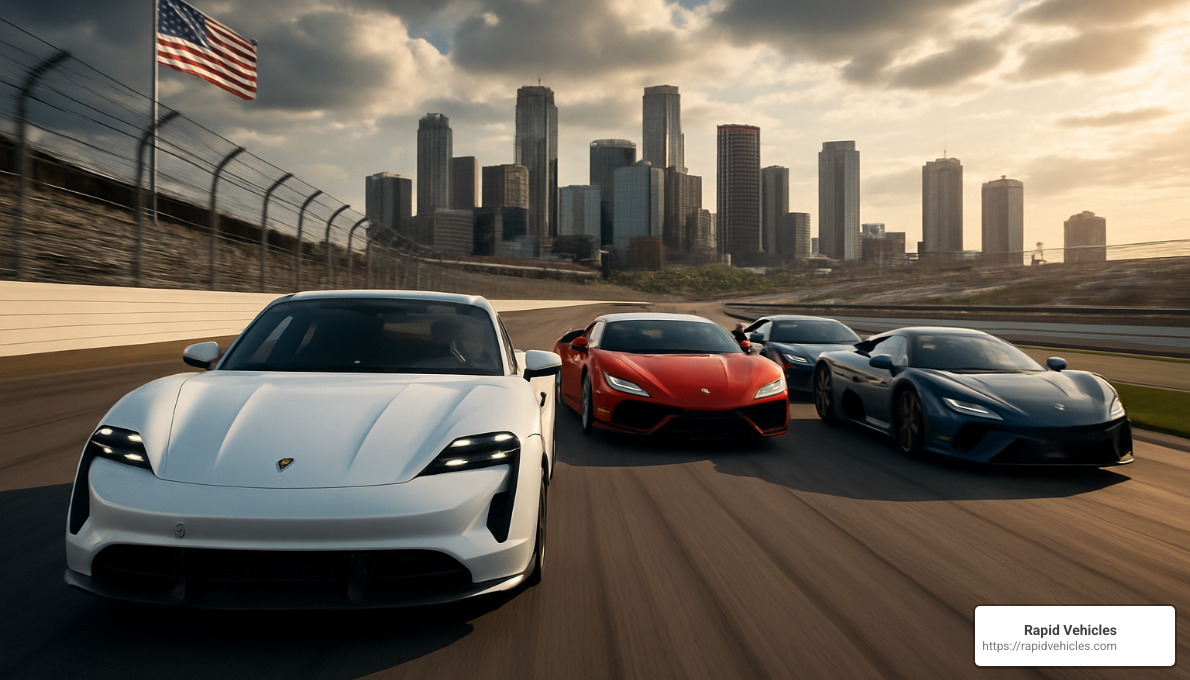
Remember when a 5-second 0-60 time was considered blazingly fast? Those days are long gone! The automotive world has entered a new era where the fastest production cars are shattering what we once thought physically possible.
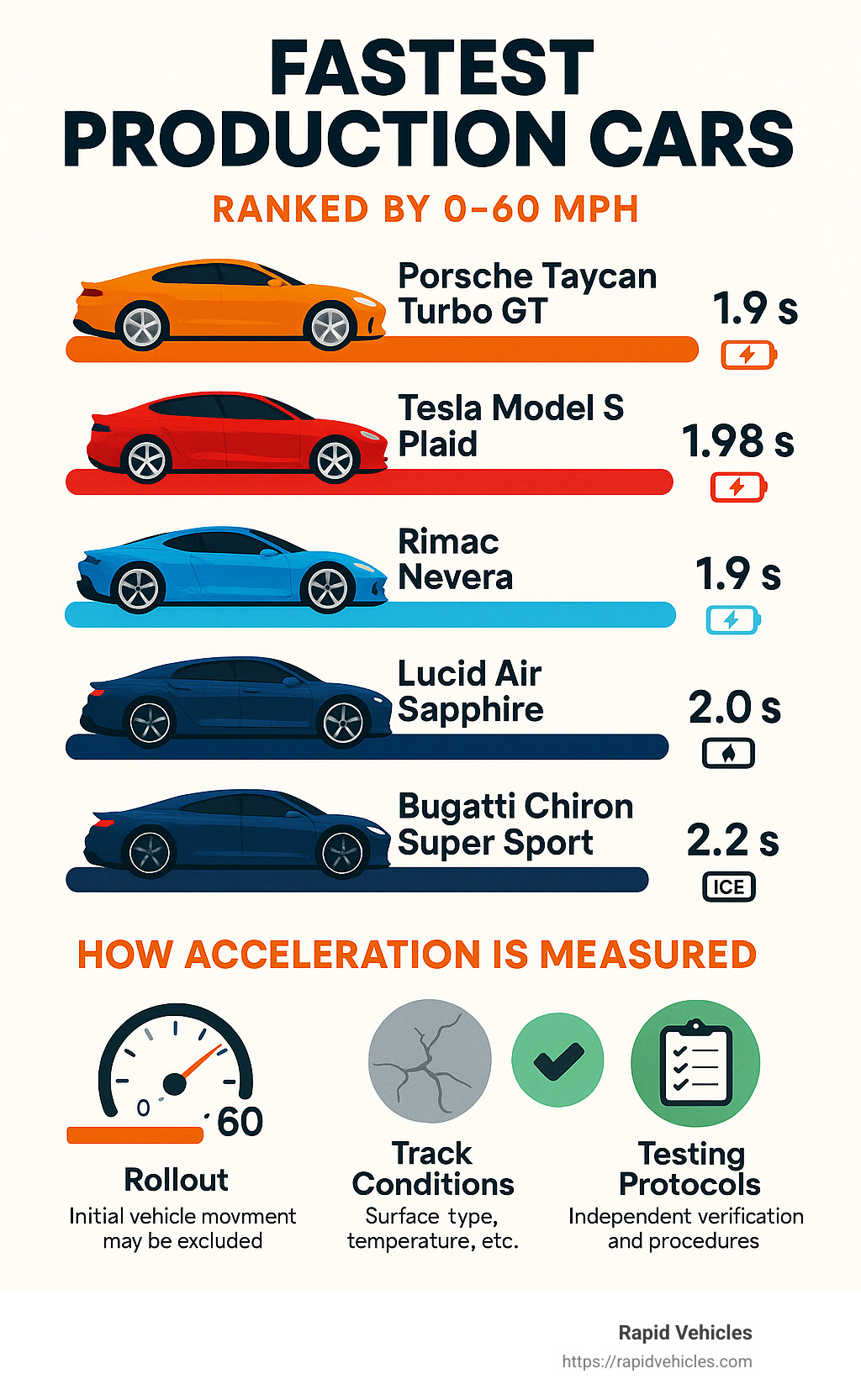
As of 2025, the acceleration crown belongs to the Porsche Taycan Turbo GT with its jaw-dropping 1.898-second sprint to 60 mph. Hot on its heels is the Tesla Model S Plaid at 1.98 seconds and the Croatian electric hypercar Rimac Nevera at 1.95 seconds. Not far behind, the Lucid Air Sapphire clocks 2.1 seconds, while the mighty Bugatti Chiron Super Sport manages 2.2 seconds with its thunderous W16 engine. Rounding out the top contenders, the Ferrari SF90 Stradale achieves an impressive 2.0 seconds with its hybrid powertrain.
What's truly fascinating is how the battlefield has evolved. Just a decade ago, hitting 60 mph in under 3 seconds required a million-dollar hypercar with an exotic combustion engine. Today? A family sedan with four doors (albeit an electric one with three motors) can outrun most supercars from the previous generation.
The electric revolution has completely transformed the acceleration game. EVs deliver 100% of their torque instantly – no waiting for turbos to spool up or engines to reach optimal RPMs. This fundamental advantage has forced traditional manufacturers to accept hybrid systems, sophisticated launch control, and all-wheel-drive just to stay competitive.
Thomas Jay McCahill, the automotive journalist who invented the 0-60 mph test back in 1946, would be absolutely floored by today's numbers. We've gone from celebrating 10-second runs to sub-2-second launches in just a few generations of automotive development. What once seemed like science fiction is now available at your local dealership (if you have the budget, of course).
These acceleration figures aren't just numbers for bragging rights – they represent the absolute pinnacle of automotive engineering. Every component from battery chemistry to tire compounds has been optimized to deliver these mind-bending launches. The sheer g-forces these vehicles generate can quite literally take your breath away.
Whether you're in the market for your next hypercar or simply appreciate engineering excellence from the sidelines, understanding what makes these vehicles so blindingly quick – and how their performance is measured – gives you a glimpse into the future of automotive performance.
What Qualifies as a "Production Car"?
When we talk about the fastest production cars in the world, there's an important question we need to answer first: what exactly counts as a "production car"? This isn't just car-nerd nitpicking—it's essential for making sure we're comparing apples to apples when discussing record-breaking vehicles.
Think about it this way: if a manufacturer builds one super-special version of a car with extra power and special tires just to set a record, should that count? Most car enthusiasts would say no, and that's why we have specific criteria.
For a vehicle to truly qualify as a production car, it needs to check several important boxes. First, it must be built primarily for regular consumers to purchase, not as a one-off showpiece. It also needs to be manufactured in reasonable numbers—generally at least 25-30 identical vehicles—to prove it's not just a limited prototype.
Street legality is another must-have. As Andy Wallace (who set the McLaren F1's famous 240.1 mph record back in 1998) perfectly put it: "A true production car is one that any customer with sufficient funds can walk into a dealership and purchase, then drive away on the same tires that set the record."
The car must also meet all safety and emissions standards in its intended markets, complete with proper homologation documents. And importantly, it must use the exact same components—from tires to engine to aerodynamic pieces—that regular customers receive when they buy the car.
This distinction matters because throughout automotive history, some manufacturers have tried to claim records using specially prepared "production" cars that no actual customer could ever buy in that specification.
Key Certification Bodies & Definitions
Several organizations help maintain integrity in automotive records by verifying and certifying production car achievements:
Guinness World Records maintains perhaps the most widely recognized standards. They require documented proof of production numbers, street legality, and verification that record-setting vehicles match customer cars exactly. Their strict criteria caused quite a stir in 2010 when they temporarily took away the Bugatti Veyron Super Sport's top speed record after finding its electronic limiter had been deactivated for the record run.
The FIA (Fédération Internationale de l'Automobile) provides what many consider the gold standard for land speed certification, though they typically focus more on specialized record vehicles than regular production cars. When they do certify production models, they demand extensive documentation proving legitimate production status.
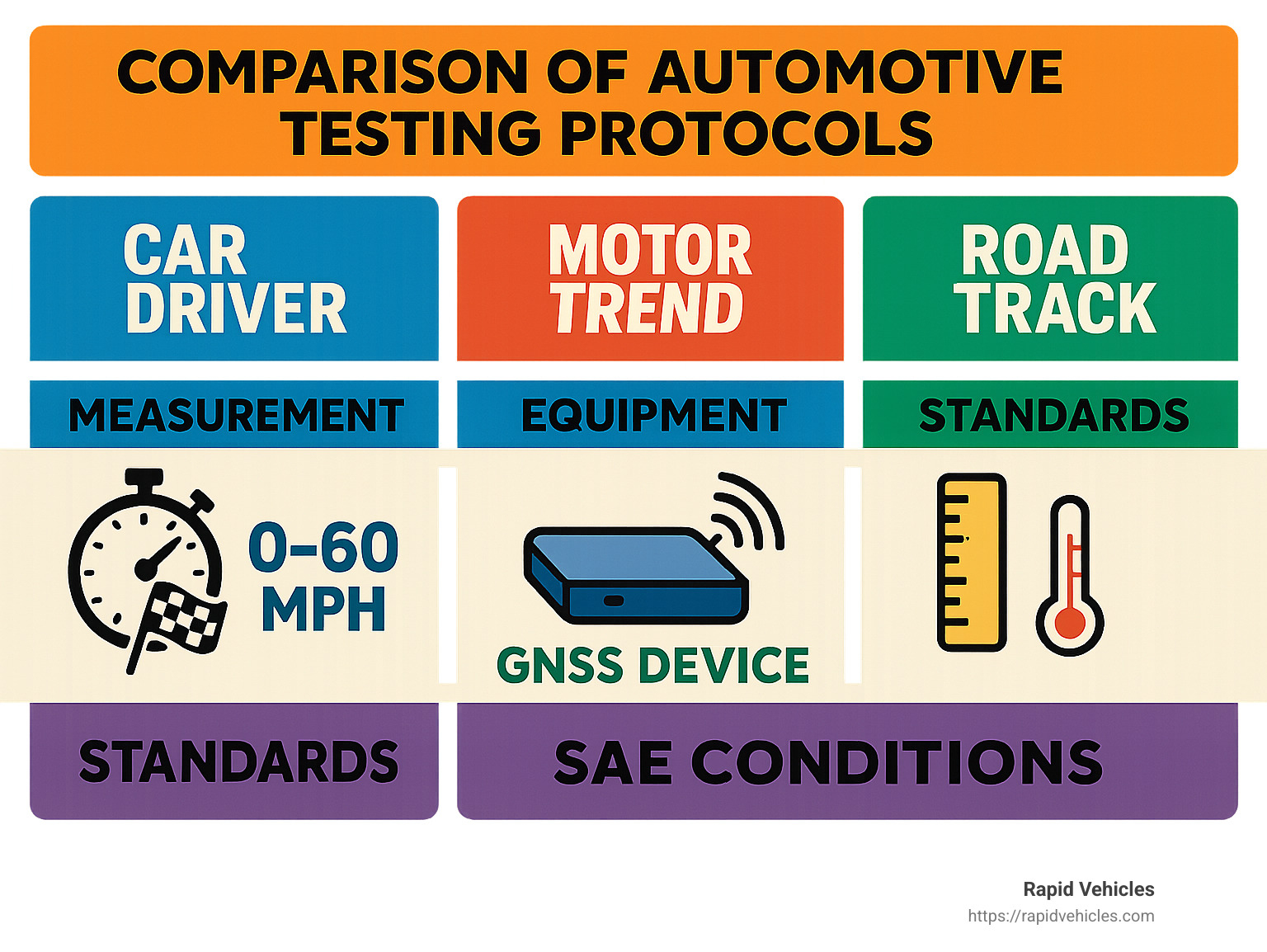
Independent Media Testing also plays a crucial role. Publications like Motor Trend, Car and Driver, and Road & Track have developed testing protocols that have become industry standards. As Carlos Lago of Motor Trend explains their process: "At the end of our day, when no one was looking, I hopped in the P1 with our Vbox data recorder... and then activated launch control. We subtract a one-foot rollout from the launch to simulate dragstrip performance."
These media outlets typically run multiple tests in opposite directions to account for wind and grade, use standardized surface preparation, apply consistent weather correction factors, and transparently disclose their testing equipment and methods. You can learn more about these testing methodologies in Testing, Testing ‑ The Motor Trend Way.
For car enthusiasts like us at Rapid Vehicles, understanding these distinctions helps cut through marketing hype and identify truly exceptional automotive achievements—the kind that inspire the performance parts we're passionate about.
How We Measure Speed: Core Acceleration Metrics
When it comes to fastest production cars, how do we actually determine which vehicle deserves the crown? Let's break down the metrics that matter most in the high-stakes world of automotive acceleration.
0-60 MPH (0-97 KM/H)
This is the automotive world's most famous number – the acceleration metric everyone wants to know. It measures how quickly a car can sprint from a complete standstill to 60 miles per hour.
The current king of the hill? The 2025 Porsche Taycan Turbo GT with its jaw-dropping 1.898-second time. The Tesla Model S Plaid follows closely at 1.98 seconds – both breaking the once-mythical 2-second barrier.
I remember when a 5-second 0-60 time was considered supercar territory. Now family sedans (albeit very expensive ones) are doing it in under 2 seconds! This benchmark has become automotive royalty – the first number mentioned in reviews, the highlight of manufacturer press releases, and the stat most likely to impress your friends.
0-100 KM/H (0-62 MPH)
Our friends across the pond prefer this metric, which measures acceleration to 100 kilometers per hour (or 62 mph). While it might seem nearly identical to the 0-60 mph test, those extra 2 mph typically add about 0.1-0.2 seconds to the time.
The Porsche Taycan Turbo GT again leads the pack here with a blistering 2.186-second run. Next time you're at a European car meet, this is the number they'll be discussing over espresso.
Quarter-Mile Time
If 0-60 mph is a sprint, the quarter-mile is middle-distance – measuring both elapsed time and trap speed over 1,320 feet (402 meters). This drag racing standard gives us a more complete picture of a car's acceleration beyond just the initial launch.
The electric Rimac Nevera currently holds the production car record with an 8.4-second quarter mile. To put that in perspective, that's a time that would have been competitive in professional drag racing categories not too long ago – from a car you can theoretically drive to the grocery store!
Rollout Adjustment
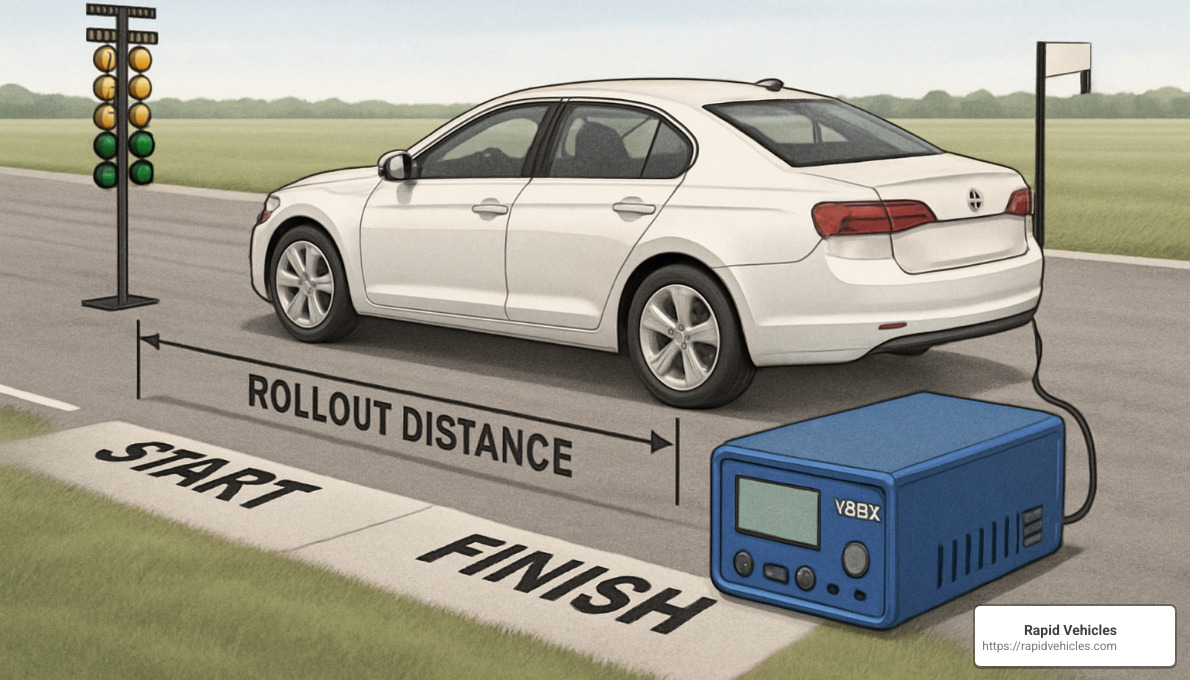
Here's where things get a bit controversial. The "rollout" adjustment simulates drag strip timing, where timing doesn't start until the car has traveled 1 foot from the starting line. As Car and Driver explains, this adjustment can shave up to 0.3 seconds off the elapsed time.
Many manufacturer claims that seem impossibly quick often include this adjustment without explicitly saying so. It's like starting a race a few steps ahead – technically not cheating in the drag racing world, but definitely worth noting when comparing numbers.
These days, reputable automotive publications clearly state whether their testing includes rollout. Motor Trend, for instance, is transparent about their methodology: "We subtract a one-foot rollout from the launch to simulate dragstrip performance."
Weather Corrections
Mother Nature has a significant say in how quickly cars accelerate. Temperature, humidity, barometric pressure, and altitude all affect performance – sometimes dramatically. That's why professional testers apply standardized correction factors to normalize results.
A run at Denver's mile-high altitude on a sweltering summer day might be adjusted downward by several tenths of a second to represent what the car would achieve at sea level in 60°F weather. These corrections help ensure we're comparing apples to apples when crowning the fastest production cars.
Why 0-60 mph Dominates Searches for fastest production cars
Despite having more comprehensive metrics available, the 0-60 mph time remains the benchmark everyone cares about. Why has this particular measurement captured our collective imagination?
For starters, it has history on its side. Thomas Jay McCahill invented this test back in 1946 for Mechanix Illustrated magazine, and it's stuck around ever since. It's also something most drivers can actually experience – unlike 200+ mph top speeds that require a track and nerves of steel.
Electric vehicles have only strengthened this metric's dominance. EVs deliver instant torque that makes them acceleration monsters, even if they don't have the highest top speeds. The 0-60 dash perfectly showcases their strengths.
As one automotive journalist put it to me: "Zero to sixty isn't just a number—it's the automotive equivalent of a fighter jet's thrust-to-weight ratio. It tells you exactly how a car will punch you in the chest when you floor it."
It's the number that makes us grin, the figure that sells cars, and the metric that will likely remain king for years to come – no matter how the automotive landscape evolves.
Porsche Taycan Turbo GT (2025)
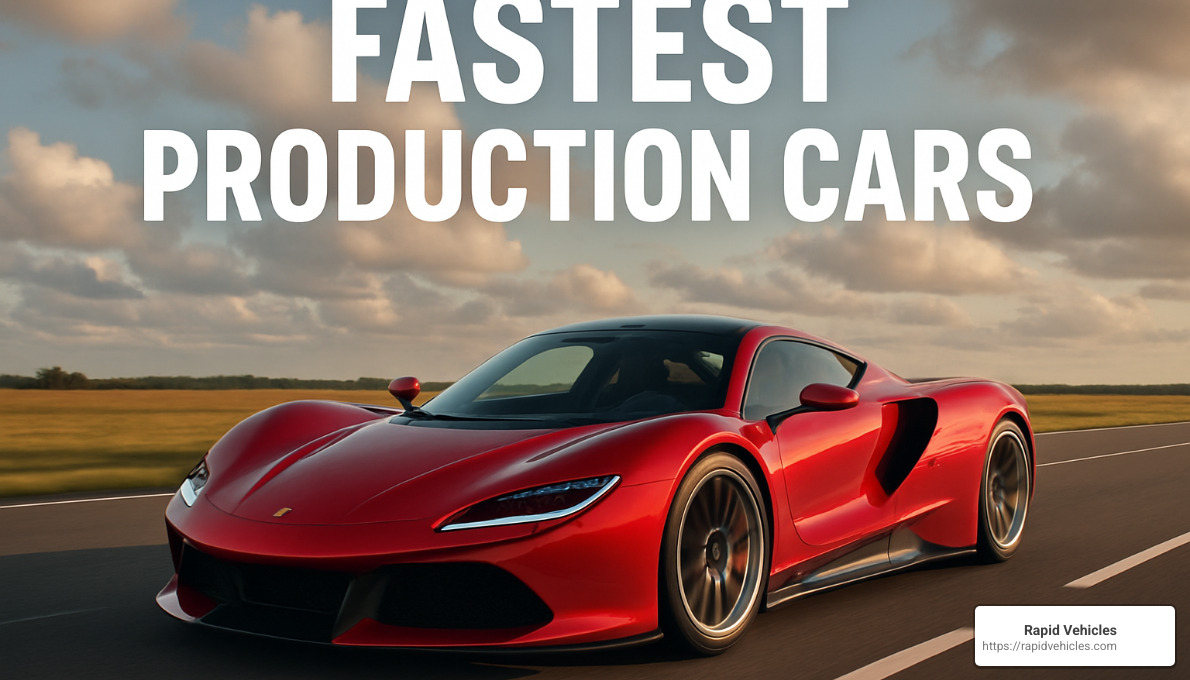
The automotive world was stunned when the 2025 Porsche Taycan Turbo GT snatched the acceleration crown with an almost unbelievable 0-60 mph time of just 1.898 seconds. Let that sink in for a moment – that's faster than you can say "world's fastest production car"!
This isn't just quick; it's the kind of acceleration that presses you back into your seat with such force that you might wonder if Porsche secretly installed rocket boosters. Your brain barely has time to process what's happening before you're already cruising at highway speeds.
What makes the Taycan Turbo GT so special? For starters, it packs a whopping 1,092 horsepower when its "Attack Mode" is engaged – a feature that sounds like it came straight out of a video game. This temporary power boost transforms an already quick electric sports car into something that defies what we thought possible on four wheels.
Perhaps the most impressive part is that this isn't some unicorn hypercar that exists only in collectors' climate-controlled garages. The Taycan Turbo GT is essentially a four-door electric sports car you could drive to get groceries (though your eggs might get scrambled on the way home). Opt for the Weissach package, and Porsche will even remove the rear seats to shed more weight – because who needs passengers when you're breaking physics?
The quarter-mile stats are equally jaw-dropping. The Taycan Turbo GT blazes through in just 9.15 seconds – a time that would have made dedicated drag racers green with envy not too long ago. This isn't just quick for an EV; it's quick, period.
During its record-setting run, the Taycan's battery was charged between 90-100%, its temperature management systems were perfectly dialed in, and its launch control was activated alongside that special "Attack Mode." The result? Porsche, a company with decades of sports car heritage, showed the upstart EV makers how it's done.
This achievement represents more than just bragging rights for Porsche – it's a turning point where traditional luxury automakers have proven they can outpace specialized hypercar manufacturers and EV startups at their own game. The electric revolution has officially arrived at the top of the performance mountain, wearing a Porsche badge.
Tesla Model S Plaid (2025 spec)
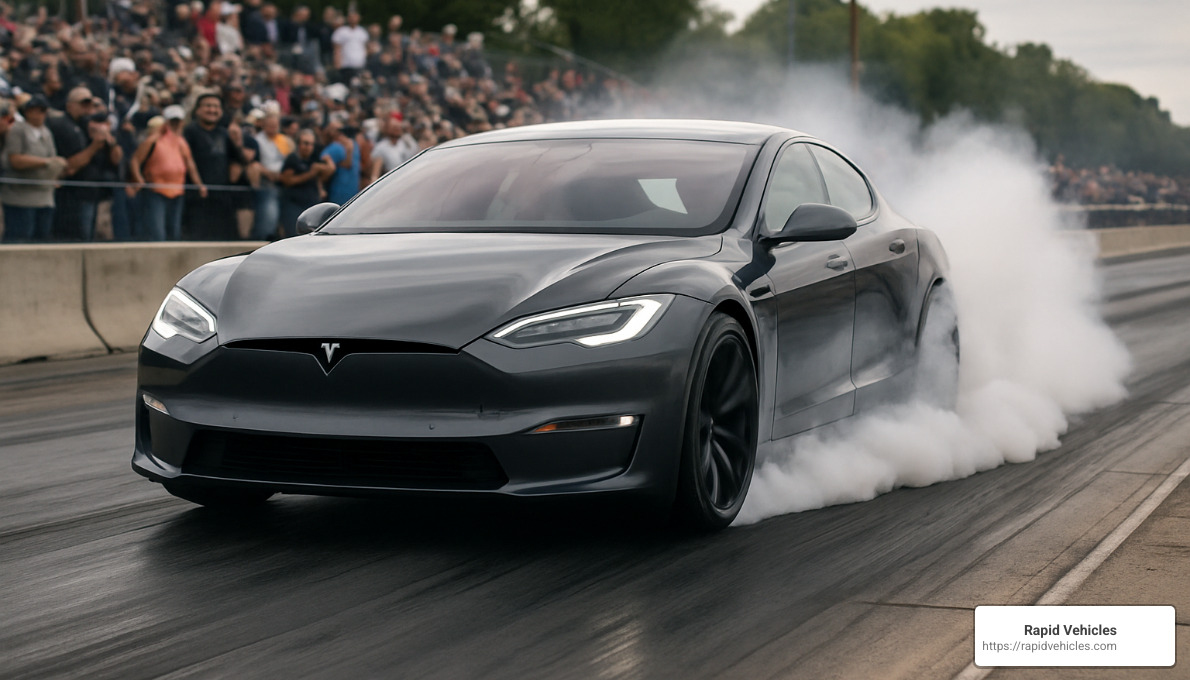
When it comes to fastest production cars, the Tesla Model S Plaid continues to defy expectations in 2025. This everyday family sedan has somehow maintained its position as one of the quickest vehicles on the planet, all while keeping its price tag remarkably accessible compared to its exotic competitors.
With an official 0-60 mph time of 1.98 seconds (with rollout subtracted), the Plaid sits proudly as the second-quickest production car available today. What makes this achievement truly jaw-dropping isn't just the number itself, but the package it comes in - a comfortable five-seat sedan with ample trunk space that you can drive to Costco after embarrassing supercars at stoplights.
The secret to the Plaid's blistering acceleration lies in its innovative tri-motor setup. With 1,020 horsepower distributed across all four wheels, the car launches with virtually zero wheelspin. Tesla's engineers cleverly gave each rear wheel its own dedicated motor, enabling incredibly precise torque vectoring that plants every bit of power exactly where it's needed most.
Perhaps the most remarkable aspect of Tesla ownership is how the cars actually improve over time. Thanks to over-the-air updates, Plaid owners have enjoyed performance improvements without ever visiting a service center. Recent software tweaks have refined power delivery and launch control algorithms, helping this 2021-launched vehicle remain competitive even as newer challengers enter the arena.
"I can drop the kids at school, demolish a Bugatti at a stoplight, then pick up groceries—all without using a drop of gas," one owner told us, perfectly capturing the Plaid's unique appeal.
In quarter-mile testing, the Model S Plaid has recorded times of 9.3 seconds at 152.2 mph - numbers that would have placed it among professional drag racing vehicles just a decade ago. And it achieves this while offering genuine everyday usability and a price tag under $110,000, roughly one-tenth what you'd pay for most hypercars with similar acceleration figures.
The 2025 specification brings subtle but meaningful improvements to thermal management, allowing for more consistent performance during extended high-speed driving sessions. For those who occasionally take their Plaid to track days, this means less power reduction during multiple hard acceleration runs - a welcome improvement to an already formidable package.
Rimac Nevera
The Croatian-built Rimac Nevera represents perhaps the most extreme expression of electric hypercar performance available today. With a verified 0-60 mph time of 1.95 seconds and the production car quarter-mile record of 8.4 seconds, the Nevera stands as an engineering tour de force.
Unlike mass-market EVs, the Nevera was conceived from the ground up as a no-compromise hypercar. Its carbon monocoque chassis houses a massive 120 kWh battery pack and four electric motors—one for each wheel—that produce a combined 1,914 horsepower and 1,740 lb-ft of torque.
Mate Rimac, the company's founder, began his career converting his BMW E30 to electric power in a garage. Today, his company produces what may be the most technologically advanced production car on the planet.
The Nevera's acceleration capabilities are so extreme that Rimac had to develop special tires with Michelin to handle the immense torque. Even with these bespoke tires, the car's acceleration is traction-limited rather than power-limited—it simply has more torque than its contact patches can handle.
Perhaps most impressively, the Nevera achieves its record-setting performance without specialized drag preparation. As one test driver noted: "Unlike some competitors that require special surfaces or preparation, the Nevera will deliver virtually the same performance on any reasonable asphalt surface."
With a production run limited to 150 units and a price tag of approximately $2.4 million, the Nevera represents the pinnacle of electric hypercar exclusivity and performance.
Lucid Air Sapphire
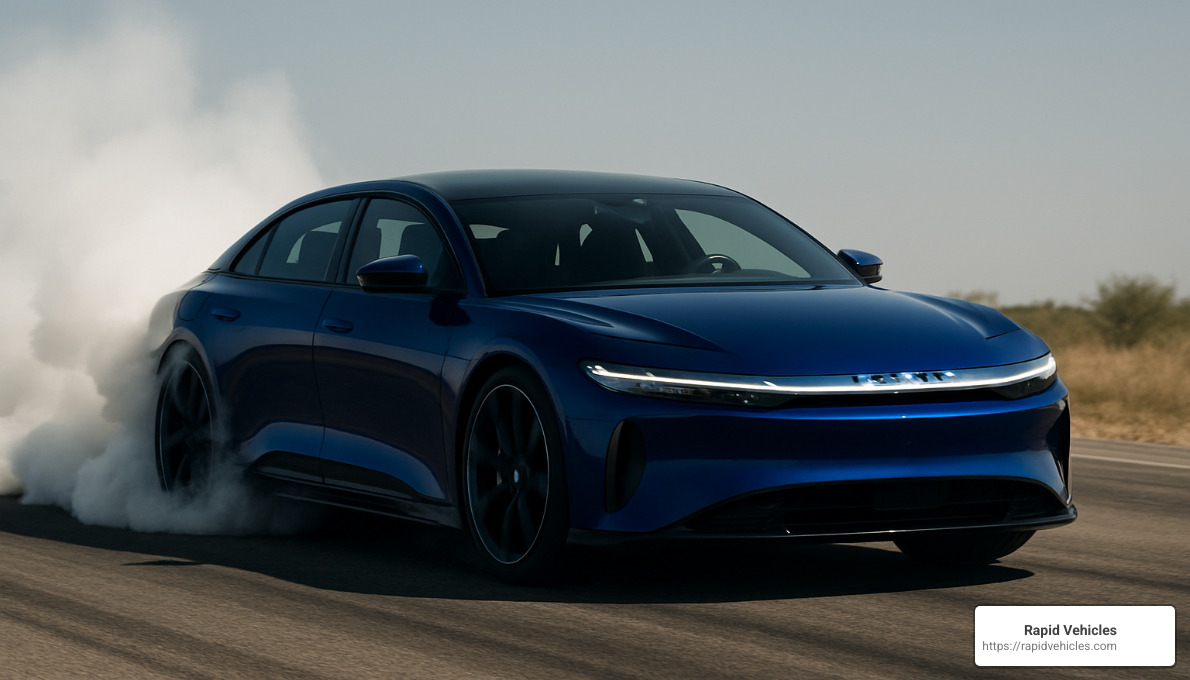
When the Lucid Air Sapphire burst onto the scene, it didn't just make a statement – it completely rewrote what Americans could expect from a luxury performance sedan. With a jaw-dropping 0-60 mph time of 2.1 seconds and a quarter-mile dash in just 9.1 seconds, this isn't just another fast car – it's America's homegrown hypercar disguised as a premium four-door.
What makes the Sapphire truly special is how it balances blistering speed with genuine luxury. While some fastest production cars sacrifice comfort for performance, Lucid has somehow managed to deliver both. Slip inside and you're greeted with sumptuous materials, meticulous craftsmanship, and a cabin that feels more like a high-end lounge than a race car cockpit.
Under its sleek skin, the Sapphire packs a tri-motor electric powertrain that delivers a staggering 1,234 horsepower. That's not a typo – this family sedan produces more power than many purpose-built race cars. Lucid's Formula E racing experience shines through in the sophisticated thermal management system, which keeps performance consistent even during repeated acceleration runs. No one-hit wonder here!
Motor Trend's testing revealed some eye-watering numbers beyond just the 2.1-second 0-60 mph time. The Sapphire rockets from 0-100 mph in just 4.3 seconds – quicker than many sports cars can reach 60 mph. Even more impressively, it achieves these figures without the drama or specialized preparation many hypercars require.
"The Sapphire isn't just about straight-line speed," explains Lucid CEO Peter Rawlinson, who previously served as chief engineer for the Tesla Model S. "It's about delivering a holistic performance experience that doesn't compromise luxury or everyday usability."
Priced around $249,000, the Air Sapphire occupies an interesting middle ground in the fastest production cars landscape. It's considerably more expensive than the Tesla Model S Plaid but offers a level of refinement and luxury that justifies the premium. At the same time, it delivers acceleration that rivals or beats hypercars costing ten times as much.
For those who want supercar thrills without sacrificing rear seats, trunk space, or daily comfort, the Lucid Air Sapphire makes a compelling case as perhaps the most well-rounded member of the sub-3-second club.
Bugatti Chiron Super Sport
The Bugatti Chiron Super Sport stands as perhaps the ultimate expression of internal combustion engine performance in the modern era. With a 0-60 mph time of 2.2 seconds and a quarter-mile time of 9.1 seconds, it remains competitive with electric hypercars despite relying on traditional combustion power.
The heart of the Chiron Super Sport is its 8.0-liter quad-turbocharged W16 engine producing 1,577 horsepower—an engineering marvel that represents the pinnacle of internal combustion development. In an era increasingly dominated by electric power, the Chiron's W16 stands as a monument to automotive history.
Bugatti's achievement is particularly impressive considering the Chiron Super Sport weighs over 4,400 pounds—significantly more than most hypercars. This weight penalty makes its acceleration all the more remarkable.
The Chiron Super Sport's performance extends far beyond initial acceleration. While electric competitors may have an advantage in 0-60 mph times, the Bugatti pulls ahead at higher speeds, achieving 0-124 mph in just 5.8 seconds and a top speed of 273 mph (electronically limited from its record run of 304.77 mph).
As Andy Wallace, Bugatti's official test driver who piloted the Chiron to its record top speed, explained: "The Chiron Super Sport delivers its power in a way that no electric car can match—the relentless pull at high speeds is simply otherworldly."
With a price tag exceeding $3.9 million and extremely limited production, the Chiron Super Sport represents the ultimate expression of Bugatti's "form follows performance" philosophy.
Ferrari SF90 Stradale
The Ferrari SF90 Stradale represents the Maranello brand's most technologically advanced road car and its first plug-in hybrid. With a 0-60 mph time of 2.0 seconds, it delivers acceleration that rivals dedicated electric hypercars while maintaining Ferrari's emotional combustion engine experience.
The SF90 achieves its remarkable performance through a hybrid powertrain that combines a twin-turbocharged 4.0-liter V8 engine with three electric motors—one between the engine and transmission, and two on the front axle. This setup delivers a combined 986 horsepower and, crucially, all-wheel drive for maximum launch capability.
Ferrari's launch control system, called "Launch Control," optimizes power delivery to all four wheels, allowing the SF90 to put down its massive power without excessive wheelspin. The electric motors on the front axle provide instant torque from 0 rpm, filling in the gap before the turbocharged V8 reaches its power band.
Car and Driver's testing revealed that the SF90 Stradale can accelerate from 0-100 mph in just 4.8 seconds—a figure that would have been competitive for 0-60 mph times not too long ago.
What makes the SF90 particularly special is that it achieves this performance while maintaining Ferrari's signature driving experience. As one test driver noted: "The SF90 gives you the instant response of electric power combined with the spine-tingling sound and emotional connection of a Ferrari V8."
With a starting price around $625,000, the SF90 Stradale represents a relative value in the hypercar world, offering acceleration comparable to cars costing several times as much.
Lamborghini Revuelto
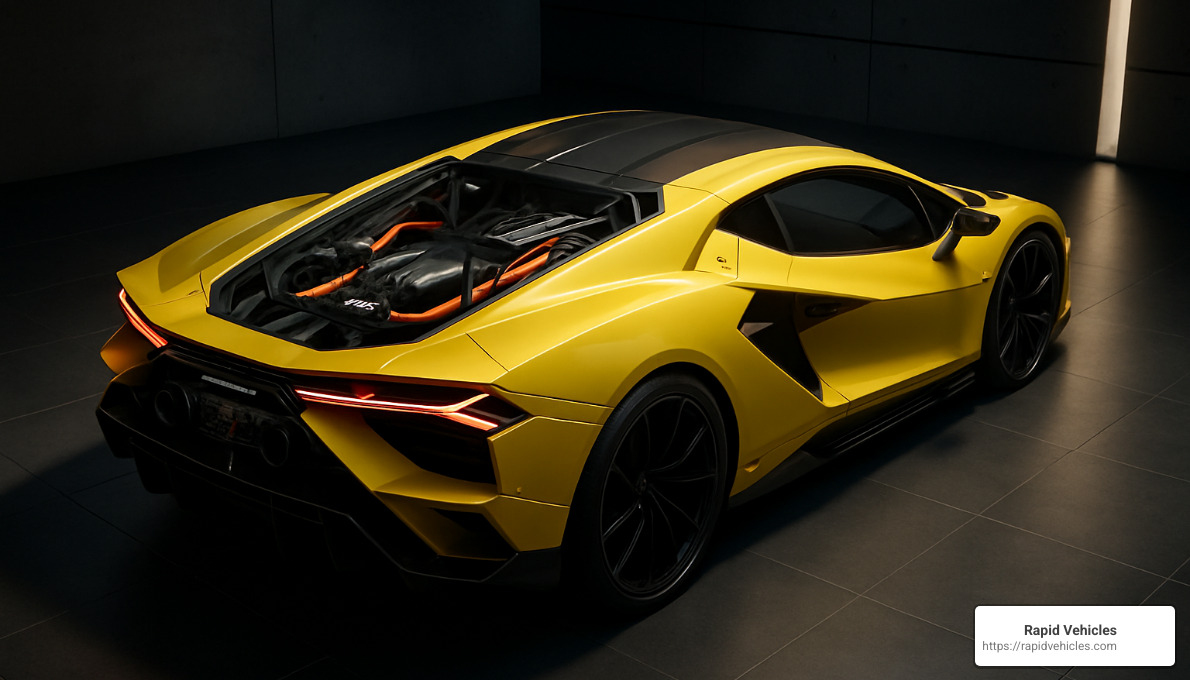
The Lamborghini Revuelto isn't just another supercar—it's a breathtaking reinvention of what a Lamborghini can be. This beast marks a thrilling new chapter for the Italian brand, blending their iconic V12 engine with cutting-edge hybrid technology to create one of the fastest production cars on the planet.
When you mash the throttle in the Revuelto, you'll rocket from 0-60 mph in just 2.3 seconds. Let that sink in for a moment. A car with a massive V12 engine accelerating that quickly would have seemed like science fiction just a decade ago!
What makes this possible? At the heart of the Revuelto sits a glorious 6.5-liter naturally aspirated V12 that works in harmony with three electric motors—one cleverly integrated into the new eight-speed dual-clutch transmission and two powering the front wheels. This hybrid symphony produces a mind-blowing 1,001 horsepower and delivers all-wheel-drive traction for the first time in a V12 Lamborghini.
Unlike some hybrids that add electric power mainly for better fuel economy (though we doubt anyone buys a Lambo for the gas mileage!), the Revuelto's electrification is all about performance. Those electric motors provide instant torque the moment you hit the accelerator and keep the power flowing during gear changes, giving you that relentless, push-you-back-in-your-seat acceleration that supercars are famous for.
The Revuelto's carbon fiber monocoque chassis isn't just lightweight—it's 25% stiffer than the Aventador it replaces. This ultra-rigid structure allows Lamborghini's engineers to fine-tune the suspension for sharper handling without sacrificing ride quality. Whether you're attacking a racetrack or cruising through town, the car responds with remarkable precision.
When you're pushing the limits, the active aerodynamics system comes into play, with a rear wing capable of generating 500 kg of downforce. That's like having an invisible hand pressing the car into the pavement at high speeds, giving you confidence through fast corners and under heavy braking.
As Lamborghini's chief technical officer Rouven Mohr put it: "The Revuelto represents our vision for the future of the super sports car—combining the emotional appeal of a naturally aspirated V12 with the performance advantages of electrification."
With prices starting around $600,000 and limited production numbers, the Revuelto continues Lamborghini's tradition of creating exclusive performance machines that are as rare as they are rapid. It's not just a car—it's automotive art that happens to be one of the fastest production cars you can buy.
Factors That Skew "Fastest" Claims & How We Correct Them
When it comes to fastest production cars, not all speed claims are created equal. Behind those headline-grabbing acceleration times lies a world of testing variables that can dramatically affect results. At Rapid Vehicles, we believe you deserve the full picture—not just the marketing hype.
Rollout Adjustment
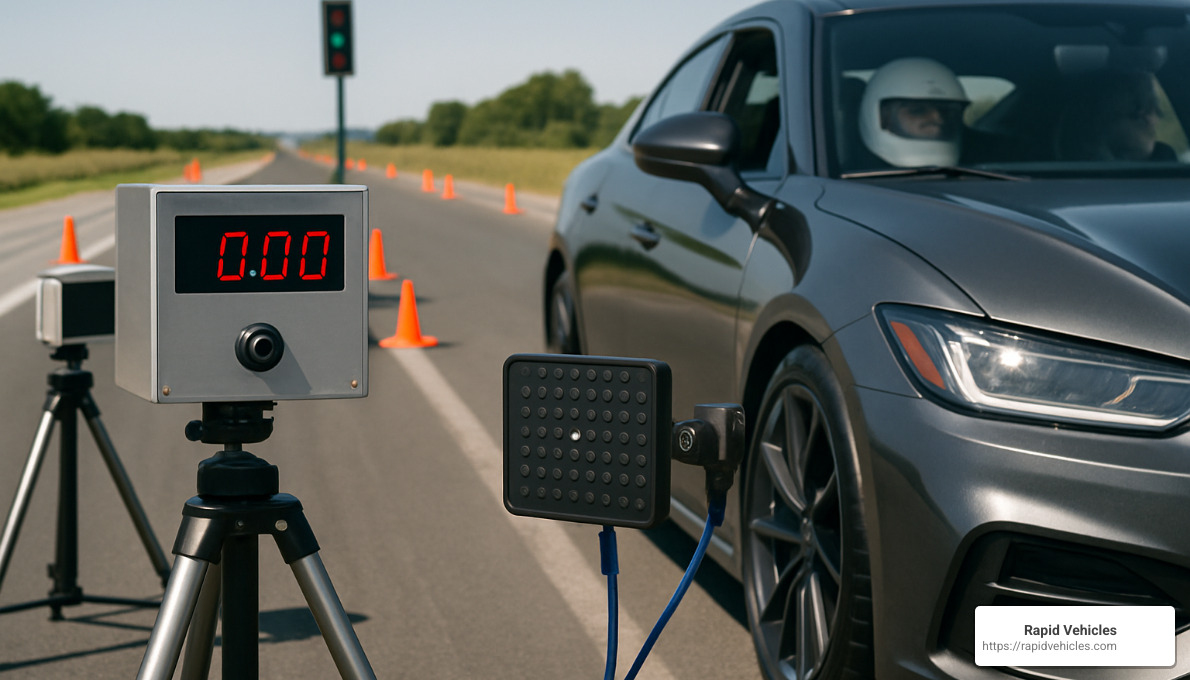
Have you ever wondered how some cars claim seemingly impossible acceleration times? The secret often lies in something called "rollout." This drag-racing technique essentially gives the car a running start by beginning the timing only after the vehicle has already moved forward one foot.
The difference is substantial. Car and Driver magazine notes that rollout can shave off up to 0.3 seconds from a 0-60 mph time. That's huge in a world where manufacturers battle over hundredths of a second! A car advertised with a mind-blowing 2.0-second 0-60 time might actually need 2.3 seconds from a true standstill.
The frustrating part? Many manufacturers now quote these rollout-adjusted times without clearly saying so. Next time you see an unbelievable acceleration claim, your first question should be: "Is that with or without rollout?"
Tire Compound and Preparation
The humble tire might be the most overlooked factor in acceleration testing. Those four contact patches—each about the size of your palm—are the only parts actually touching the road, and they make all the difference.
Specialized tire compounds can improve 0-60 times by up to 0.2 seconds compared to standard rubber. This is why the Dodge Challenger Demon 170's claimed 1.66-second 0-60 time comes with an asterisk—it was achieved using sticky drag radials that most owners won't use for daily driving.
Surface preparation matters just as much. A properly prepped drag strip with specialized traction compounds bears little resemblance to your average street. These prepared surfaces can knock tenths of seconds off acceleration times.
Even tire temperature plays a crucial role. Ever notice how race cars do burnouts before a race? They're not just showing off—they're heating the tires for better grip. Cold tires can add several tenths to acceleration times compared to properly warmed rubber.
Weather and Altitude
Mother Nature has her say in performance testing too. Environmental factors can dramatically affect how quickly cars accelerate:
Cool air is denser, providing better engine combustion and more aerodynamic grip. This is why manufacturers often test in the early morning or during winter. Low humidity helps engines breathe better, while high barometric pressure (typically found at lower altitudes) improves power output.
For every 1,000 feet of elevation gain, naturally aspirated engines lose approximately 3% of their power. That's why a car tested at sea level will almost always outperform the same car tested in Denver.
Professional testers apply standardized correction factors to account for these variables, normalizing results to standard conditions (typically sea level, 60°F, 0% humidity). This creates a level playing field when comparing different vehicles tested under different conditions.
Independent vs. Manufacturer Testing
Have you ever noticed that manufacturer-claimed performance figures often seem optimistic compared to magazine test results? There's a reason for that gap:
Testing expertise makes a huge difference. Manufacturer test drivers have thousands of hours of experience launching their specific vehicles—they know exactly how to extract every last bit of performance.
Vehicle preparation isn't always representative of real-world conditions. Manufacturers may test with minimal fuel loads (saving weight) and sometimes even remove interior components for official tests.
There's also natural cherry-picking at play. Car companies run multiple tests and publish their best results, while magazines typically report averages or medians from several runs.
At Rapid Vehicles, we place greater trust in independently verified performance figures from reputable publications using consistent testing methodologies. They better represent what real owners will experience.
Controversies Surrounding fastest production cars Numbers
The world of automotive performance claims has seen its share of drama and controversy:
When Tesla claimed a 1.99-second 0-60 mph time for the Model S Plaid, Motor Trend initially measured 2.1 seconds—a significant difference in the hypercar world. The discrepancy? Tesla included rollout in their figure. When Motor Trend applied the same adjustment, they matched Tesla's claim. This highlights the importance of consistent testing protocols.
The original Dodge Challenger Demon created quite a stir when the NHRA (National Hot Rod Association) banned it from drag strips without a roll cage, despite being a factory stock vehicle. Its quarter-mile time of 9.65 seconds was simply too quick for NHRA safety regulations without additional protection.
While not strictly acceleration-related, the SSC Tuatara top speed controversy shows how performance claims can go wrong. Their initially claimed 331 mph run in 2020 was later found to have significant measurement errors. A subsequent verified attempt reached "only" 282.9 mph—still remarkable, but far from the original headline-grabbing figure.
Swedish hypercar maker Koenigsegg has faced scrutiny for testing vehicles on closed public roads rather than dedicated test tracks. While this demonstrates real-world capability, critics argue it doesn't provide the controlled conditions necessary for official records.
These controversies remind us that when evaluating performance claims, the methodology matters just as much as the numbers themselves. That's why at Rapid Vehicles, we believe in transparency and context when discussing the fastest production cars in the world.
Trends Shaping the Next Wave of fastest production cars
The world of fastest production cars is evolving at breakneck speed, with several fascinating trends pointing to an even more mind-blowing future of acceleration. If you think today's sub-2-second superstars are impressive, just wait to see what's coming next!
EV Dominance
Electric vehicles have seized the acceleration throne, and they're not giving it back anytime soon. This dominance isn't just a temporary shift—it's a fundamental reimagining of what makes a car quick.
The secret to EV acceleration success lies in their unique advantages. Electric motors deliver 100% of their torque instantly, with no need to build up RPMs like traditional engines. This means that when you mash the accelerator in something like a Rimac Nevera, there's zero hesitation—just immediate, violent thrust.
What's particularly exciting is how precisely electric powertrains can manage power delivery. With individual motors controlling each wheel, computers can make millisecond adjustments to maximize grip. As one Porsche engineer explained to me, "It's like having a launch control system with the reaction time of a Formula 1 driver, but even more precise."
The simplified mechanical package of EVs also plays a huge role. Without complex transmissions to manage or clutches to engage, launch control becomes primarily a software challenge rather than a mechanical one. And with battery packs positioned low in the chassis, weight distribution can be optimized specifically for maximum launch performance.
As battery technology continues to improve—with higher energy density and faster discharge rates—we're likely to see even more impressive EV acceleration figures in the coming years.
Hybrid Assistance
Traditional supercar manufacturers aren't surrendering to all-electric powertrains just yet—they're embracing hybridization as the perfect middle ground between performance and emotional engagement.
Ferrari's SF90, Lamborghini's Revuelto, and McLaren's latest hybrids all use electric motors not just for efficiency but as performance improvers. These systems brilliantly compensate for traditional engine weaknesses, providing instant torque when turbos are still spooling up or during gear changes when torque would normally drop.
One of the most clever applications is using electric motors to power the front wheels in mid-engine cars. This creates all-wheel drive capability without the need for complex mechanical connections from the mid-mounted engine to the front axle. When launching from a standstill, this makes a massive difference in traction.
As one Ferrari engineer put it, "The hybrid system gives us the best of both worlds—the emotional connection of a screaming V8 or V12, plus the instant response and torque-fill capabilities of electric motors."
Software-Defined Launch Modes
The next generation of fastest production cars will rely as much on silicon as steel. Software is becoming the secret weapon in the acceleration wars.
Modern launch control systems are evolving beyond simple traction management into predictive systems that anticipate wheelspin before it happens. Using an array of sensors monitoring road texture, temperature, and even visual data from forward-facing cameras, these systems can adjust power delivery milliseconds before traction would be lost.
Tesla pioneered the concept of over-the-air performance updates, and now traditional manufacturers are following suit. Your supercar might actually get quicker while sitting in your garage, thanks to software refinements pushed wirelessly.
Some systems are even beginning to learn their drivers' habits. As one BMW software engineer explained, "The car begins to understand how aggressively you apply inputs and can tailor its response accordingly. It's like having a launch control system that adapts to your personal driving style."
Tech Breakthroughs Behind Sub-2-Second fastest production cars
Several remarkable technological innovations have made the current crop of sub-2-second cars possible, and they point the way toward even more extreme performance.
Instant torque delivery from electric motors provides the foundation for today's record-breaking launches. Unlike combustion engines that need to build RPM to reach peak torque, electric motors deliver their maximum twist from a standstill—exactly when you need it most for acceleration.
Modern battery chemistry has evolved to deliver astonishing discharge rates. Today's lithium-ion packs can dump enormous energy in short bursts, and the solid-state batteries on the horizon promise even higher output with significantly less weight.
The grip needed for these extreme launches comes from specially developed tire compounds that walk a fine line between street legality and racing performance. These tires, often developed specifically for each hypercar model, provide the crucial connection between all that power and the pavement.
Perhaps most impressive is the evolution of torque-vectoring all-wheel drive systems. These computer-controlled networks can adjust power to each wheel independently, maximizing traction in real-time as weight shifts during launch. When you're trying to put down 1,500+ horsepower without turning your tires into smoke, this intelligence makes all the difference.
At Rapid Vehicles, we've noticed growing demand for performance upgrades that complement these sophisticated factory systems, especially for BMW models. Our diagnostic tools and performance parts can help improve the capabilities of already impressive vehicles, letting owners extract every bit of potential from their rides.
The acceleration race shows no signs of slowing down. As one hypercar developer told me recently, "We're approaching the physical limits of what's possible with four wheels on pavement. The next frontier isn't just more power—it's smarter power." That's a future we can't wait to experience!
Frequently Asked Questions about fastest production cars
What's the difference between "quick" and "fast"?
Car enthusiasts often use these terms interchangeably, but they actually refer to two very different performance attributes.
Quick describes a vehicle's acceleration - how rapidly it can increase speed from a standstill or while already moving. This is measured in those 0-60 mph times we've been discussing throughout this article. When someone says a car is "quick," they're talking about that initial punch of acceleration that pushes you back in your seat.
Fast, on the other hand, refers to top speed - the maximum velocity a vehicle can achieve given enough road. The Bugatti Chiron Super Sport 300+ holds this crown with its mind-bending 304 mph capability.
As the team at Edmunds puts it: "The Bugatti Chiron Super Sport 300+ is the fastest production car in the world, with a top speed of 304 mph. That's pretty fast, but if you think that also means 'quick,' you might be surprised to hear they're different measurements."
This distinction explains why some electric vehicles can outaccelerate hypercars despite having lower top speeds. A Tesla Model S Plaid might demolish many supercars in a 0-60 mph sprint, but its top speed is limited to around 200 mph - impressive, but nowhere near Bugatti territory.
Do rollout-adjusted times count as cheating?
This question sparks heated debates among performance enthusiasts. The short answer: it's not cheating when clearly disclosed, but it does make direct comparisons tricky.
Rollout adjustment comes from the drag racing world, where timing officially starts after the car moves one foot from the starting line. This method has been standard practice in professional drag racing for decades.
The controversy emerges when manufacturers quote these rollout-adjusted times in marketing materials without clearly stating they've used this method. This creates an uneven playing field when comparing performance figures between vehicles.
The difference can be substantial - typically 0.2 to 0.3 seconds off a 0-60 mph time. That might not sound like much, but in fastest production cars where manufacturers battle over hundredths of a second, it's enormous.
Most reputable automotive publications now clearly state whether their testing includes rollout. At Rapid Vehicles, we believe in transparency - both figures should be reported when available so enthusiasts can make fair comparisons.
Can internal-combustion ever reclaim the acceleration crown?
The laws of physics give electric motors a fundamental advantage in initial acceleration. Their ability to deliver 100% of peak torque instantly from 0 rpm is simply impossible for combustion engines to match. But don't count internal combustion out just yet.
Traditional engines still have several paths to potential comeback:
Hybrid assistance represents the most promising approach. By combining electric motors for instant low-end torque with powerful combustion engines for sustained output, hybrid hypercars can potentially match or exceed pure EV acceleration while delivering a more emotionally engaging experience.
Weight advantages also favor combustion engines in some scenarios. Despite advances in battery technology, pure ICE vehicles can still be significantly lighter than their battery-laden counterparts, which helps acceleration once initially moving.
Advanced transmission technology continues to evolve, with multi-clutch systems and predictive downshifts minimizing torque interruption during shifts.
Power density improvements through technologies like variable compression ratios and exotic materials keep pushing the boundaries of what's possible with internal combustion.
As one performance engineer shared with us: "The internal combustion engine isn't done evolving, but for pure acceleration metrics, it's fighting physics. Where ICE still wins is in emotional connection, sound, and the driving experience."
For enthusiasts who value the complete sensory experience of driving, the distinctive character of combustion engines - that spine-tingling exhaust note, the building crescendo of power, the mechanical connection - remains irreplaceable, even if the stopwatch might disagree.
Conclusion
The world of fastest production cars has truly entered a new era. What was once the stuff of science fiction—sub-2-second 0-60 mph times—is now achievable reality for multiple manufacturers using remarkably different engineering approaches.
Electric powertrains have completely transformed the acceleration landscape. The Porsche Taycan Turbo GT, Tesla Model S Plaid, and Rimac Nevera have shown us that instant torque delivery and precisely controlled all-wheel-drive can create acceleration that seems to bend the laws of physics. When you experience a modern electric hypercar launch, it feels less like driving and more like being shot out of a cannon—while sitting in a leather seat with climate control.
But don't count out the traditional hypercar makers just yet. Bugatti, Ferrari, and Lamborghini haven't waved the white flag—they've acceptd hybrid technology and developed launch control systems so sophisticated they practically deserve engineering degrees. The emotional connection of a screaming V12 or W16 paired with electric assistance creates a driving experience that appeals to both the heart and the stopwatch.
What's particularly exciting is how this incredible performance has become somewhat more accessible. The Tesla Model S Plaid delivers genuine hypercar acceleration at a price point that, while still expensive, is a fraction of what traditional exotics cost. Meanwhile, the Lucid Air Sapphire combines that neck-snapping acceleration with enough luxury and comfort to use as a daily driver. Who would have thought you could drop the kids at school and then casually outrun a million-dollar hypercar on the way home?
For those of us without hypercar budgets but still craving more performance, there are options. At Rapid Vehicles, we offer a range of performance upgrades and diagnostic tools, especially for BMW models. While we can't promise to transform your daily driver into a sub-2-second rocket ship, our performance parts can help you extract every bit of potential from your vehicle's platform.
Looking ahead, this acceleration arms race shows absolutely no signs of slowing down. The combination of electric power, advanced materials, sophisticated software, and cutting-edge aerodynamics points toward even more extreme performance in the coming years. Engineers are already whispering about 1.5-second 0-60 times being theoretically possible with the next generation of technology.
Whether you're actually shopping for one of these engineering marvels or just enjoying them from the comfort of your computer screen, today's crop of fastest production cars represents a golden age of automotive performance. We're living in a time when physics-defying acceleration isn't just available to professional racing drivers—it's available to anyone with the means to acquire it and the courage to press the accelerator all the way to the floor.